


Makeup for Black and Brown skin tones: the complete guide to a complexion that looks like you
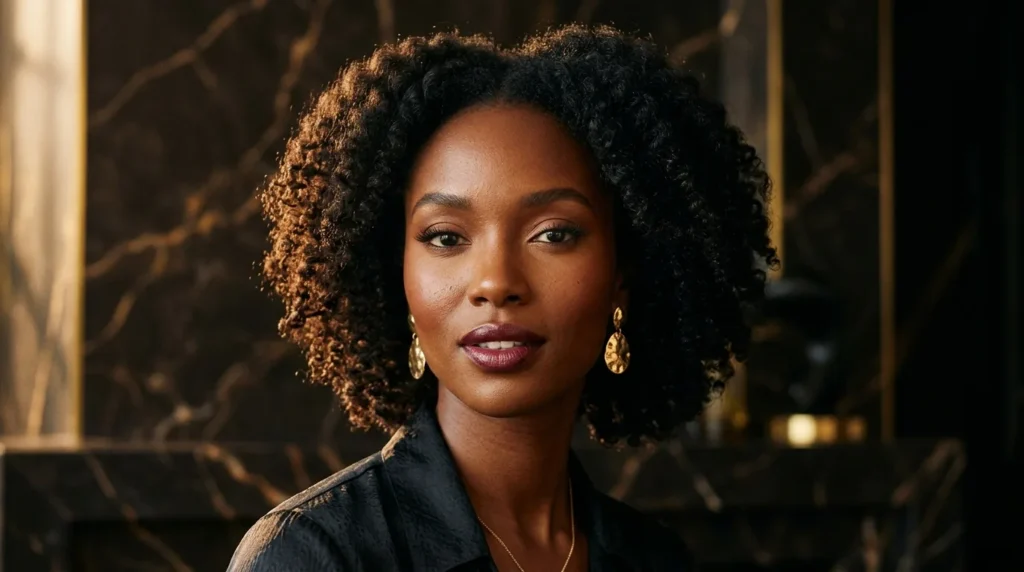
A NEW BLACK guide, the Paris makeup brand made for Black and Brown skin tones, reviewed by Charlotte Mambo, the brand's makeup artist.
Making up Black and Brown skin takes three things most beauty aisles don't offer: brown and orange pigments rather than pink ones, a real reading of your undertone, and textures that don't turn grey in daylight. This guide brings together everything you need to know, from prepping the skin to choosing colours, to get an even, luminous complexion that lasts all day without looking like a mask. It is written for you whether you are starting out or have been wearing makeup for thirty years, and whether your skin is light brown, deep brown or very dark.
At NEW BLACK, a French house designed in Paris for Black and Brown skin tones, we do one thing only: complexion products for deeper skin. This guide is the result of what we learn every day from our customers and the makeup artists who work with us. Section by section, it links to our detailed guides.
Why doesn't Black skin wear makeup the way light skin does?
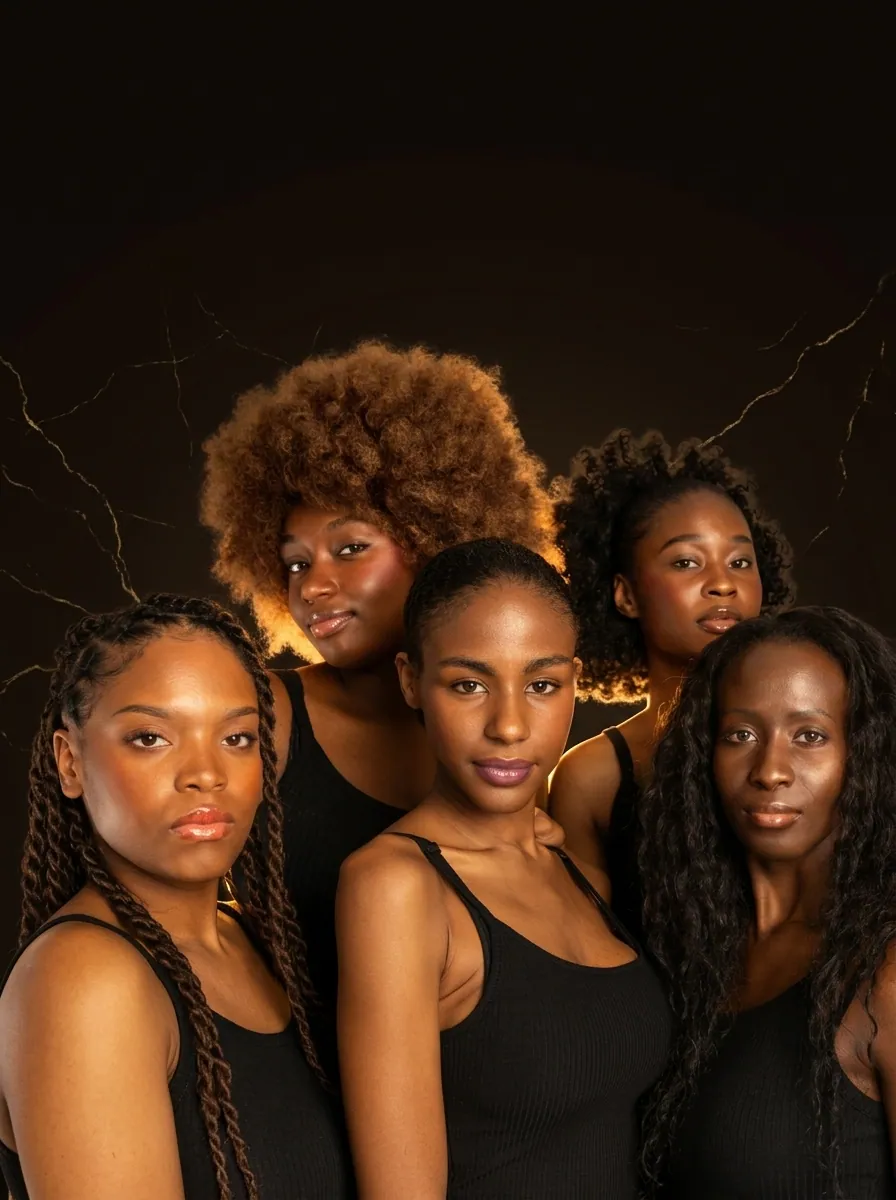
Because it doesn't have the same pigments, the same reaction to oil, or the same relationship with light. Three concrete differences explain most disappointments.
Pigments. Black and Brown skin leans golden, red-brown, olive or copper. Most foundations on the market were built on pink or beige bases designed for light skin, then simply "darkened". The result is a shade that looks right in the bottle but turns grey or dull once it's on. A foundation for deeper skin must be built on brown, orange or red pigments, with a range of undertones.
Oil and hydration. Many Black and Brown skins shine on the T-zone while being dehydrated on the cheeks. Makeup that mattifies everywhere dries out the cheeks and greys the complexion; makeup that hydrates everywhere shines within an hour. The answer is almost always a two-texture routine: a comfortable foundation, and powder only where you shine.
Light. Darker skin absorbs more light than it reflects. That is what gives it its beautiful depth, but it is also why a pastel blush or a pearly white highlighter disappears or looks chalky. You need more saturated colours and golden, bronze or copper reflections.
Our conviction, which guides every product: we reveal you, we don't transform you. Good makeup on Black skin doesn't look like makeup; it looks like beautiful skin.
Where to start: the 5-product routine
If you remember one thing: a foundation in the right shade, a light powder, a blush you can actually see, a golden highlighter and a gloss. That's it. Everything else (contouring, eyeshadow, false lashes) is a pleasure, not a requirement.
| Step | Product | Role on Black and Brown skin | The classic trap |
|---|---|---|---|
| 1 | Fluid foundation | Even out without covering, in your exact shade | A shade too light "to brighten": guaranteed grey cast |
| 2 | Tinted compact powder | Set and mattify the T-zone only | "Universal" translucent powder that leaves a white film |
| 3 | Blush | Bring back warmth and dimension | Pale pink that disappears, applied too low |
| 4 | Highlighter | Light on the high points | White or silver shimmer that looks ashy |
| 5 | Gloss or lipstick | Finish the face, add glow | A nude too light that greys the mouth |
Just starting out? Our detailed article gives you the full list, the order to buy in and three budget levels: The ultimate makeup kit for Black skin: the beginner's list.
Complexion: how to choose and apply your foundation
The right foundation for Black skin is chosen in two steps: first the undertone (warm, cool, neutral or olive), then the depth (from light to deep). The shade should disappear on your jawline in daylight, without you having to look for it.
Step 1: know your undertone
The undertone is the hue that lives beneath the surface of the skin. It doesn't depend on how deep your complexion is: very dark skin can have a cool undertone, light mixed-heritage skin can be very warm. Three simple tests, done without makeup and by a window:
- The veins on your wrist. Greenish: warm undertone. Blue or purple: cool undertone. Both: neutral.
- Jewellery. Gold lights you up: warm. Silver suits you better: cool. Both: neutral.
- White fabric. Against a white sheet, your skin looks golden or peachy: warm. It looks pink or bluish: cool.
Not sure? Our Shade guide walks you through it step by step and gives equivalents with shades from other brands you may already know.
Step 2: choose the depth
Always test three neighbouring shades on the jawline, never on the hand or wrist (both lighter than the face). Wait ten minutes: a foundation can oxidise slightly and darken on contact with the skin. The right shade is the one you can no longer see. If you're between two, take the deeper one: it blends better than a shade that's too light, and powder will soften it.
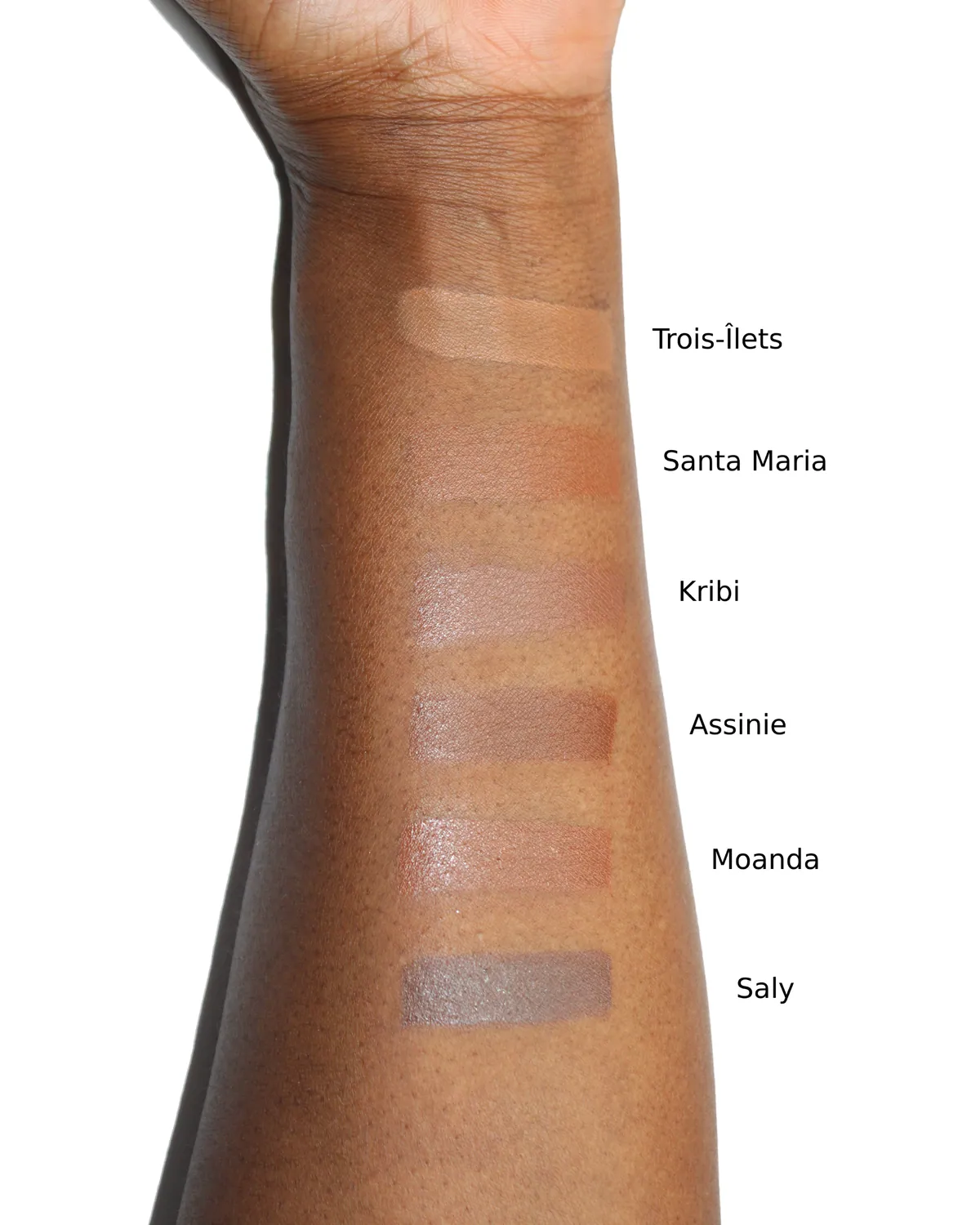
Our fluid foundation comes in six shades created for Black and Brown skin tones, from light to deep: Trois-Îlets, Santa Maria, Kribi, Moanda, Assinie and Saly. Six shades done properly rather than forty approximations: each was built on brown and orange pigments, not on a darkened pink base.
Step 3: choose the finish
- Combination to oily skin, hot climate, long days: matte or velvet finish, long-wear formula. This is the most common case among our customers.
- Dry or mature skin: satin finish, fluid texture, never a powdery matte that settles into lines.
- You want "beautiful skin, not makeup": light to buildable coverage, applied in a thin layer, then a second layer only where needed.
Step 4: apply without a line
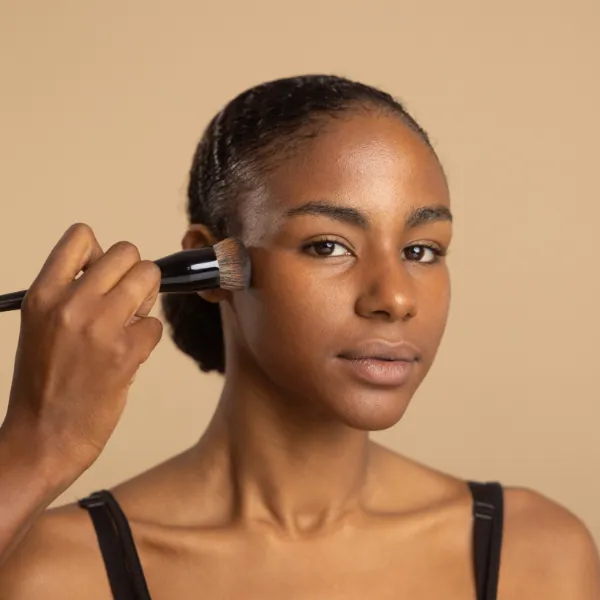
Always work in thin layers: a hazelnut-sized amount for the whole face, pulled from the centre outwards, then a second touch only on the areas that need evening out (sides of the nose, chin, around the mouth, often darker on Black skin). Blend down to the neck and out to the ears. A damp sponge gives the most natural result; a dense brush covers more; fingers warm the product and are perfect for light coverage.
To go further: our NEW BLACK no-transfer fluid foundation page details the texture, the wear and the six shades.
Why does my foundation turn grey, and how do I avoid it?
The grey cast almost always has one of four causes: a shade that's too light, an undertone that doesn't match, a translucent powder that leaves a white film, or dehydrated skin that "drinks" the product. Good news: all four can be fixed.
- Shade too light. The temptation is common: choosing half a shade lighter "to brighten the complexion". On Black skin, a foundation lighter than the skin doesn't brighten it, it greys it. Take your exact shade and let the highlighter bring the light.
- Wrong undertone. A pink-based foundation on golden-undertoned skin gives an ashy veil, even at the right depth. Redo the vein test.
- Translucent powder. "Invisible" powders often contain white powders (talc, silica) that leave a light film, very visible in flash and in photos. On Black skin, a powder must be tinted, in the shade of your foundation or half a shade deeper.
- Dehydrated skin. Skin that lacks water absorbs foundation and makes it cling. Moisturise, wait five minutes, then apply.
Setting and mattifying without going grey: the role of powder
Powder has two jobs, and it should only go where it's useful: setting the foundation and absorbing shine on the T-zone. Everywhere else, it dries and dulls.
Choose a tinted compact powder in the same family as your foundation. Apply it with a soft brush, pressing lightly (never rubbing), on the forehead, nose and chin. Cheeks, temples and the tops of the cheekbones stay powder-free: that is where the skin should keep its natural light.
Very oily skin? Prefer two light applications during the day to one thick layer in the morning. A compact powder fits in your bag and goes on without a mirror.
The fluid foundation + NEW BLACK compact powder duo is the base of most of our customers' routines: the powder follows the foundation shades, and it sets and mattifies without ever leaving a white cast.
Sculpt and illuminate: blush, highlighter, contouring
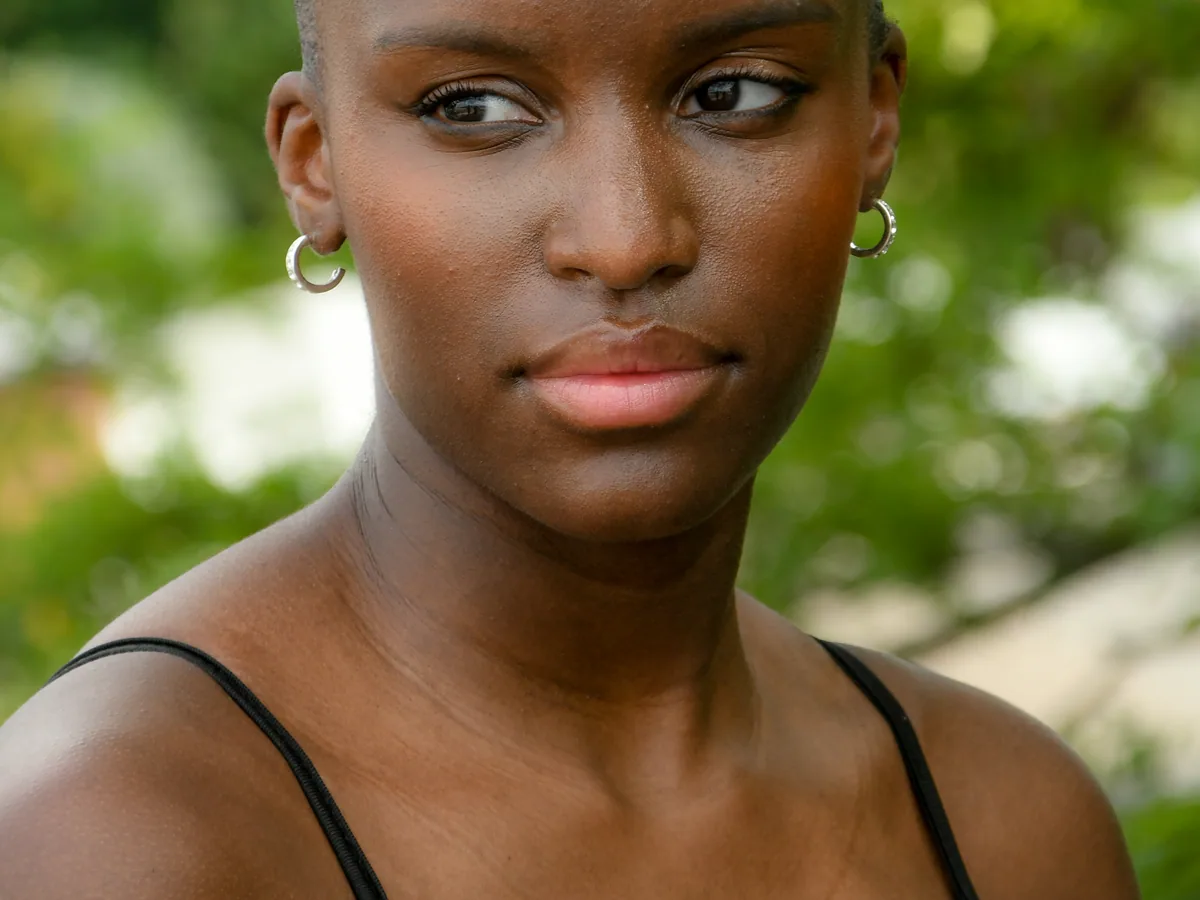
On Black skin, blush should be saturated, highlighter golden or bronze, and contour a brown two shades deeper than the skin. Pastel shades and white shimmer can be forgotten.
Blush: the colour you can see
A powdery pink blush disappears on deeper skin. The families that work:
| Undertone | Blush colours that wake up the complexion | NEW BLACK example |
|---|---|---|
| Warm, golden | Coral, orange, terracotta | Fleur Corail, Fleur Strelitzia |
| Cool, pink | Raspberry, fuchsia, plum | Fleur Anthurium |
| Neutral | Brick red, hibiscus, berry | Fleur Bissap |
Apply it on the top of the cheekbone, sweeping up towards the temple, with a soft brush; blend the edges. On very dark skin, don't be afraid of a bright colour in the pan: applied and blended, it becomes a beautiful flushed cheek. Our NEW BLACK blush comes in four shades with pigments designed to show on Black and Brown skin tones.
Highlighter: light, not powder
Highlighter should be golden, bronze, copper or rose-gold, never white or silver (the ashy effect). It goes on the high points: tops of the cheekbones, bridge of the nose, brow bone, inner corner of the eye, cupid's bow. A touch, not a stripe. Our NEW BLACK highlighter offers three reflections, from warm gold to rosy copper.
Contouring and bronzer
On Black skin, bronzer isn't for "bronzing" but for sculpting: a matte powder one to two shades deeper, under the cheekbone, along the jawline and on the sides of the forehead. Always blend upwards and outwards. Our guide: Bronzer and contouring on Black skin.
Lips: nude, gloss and colour
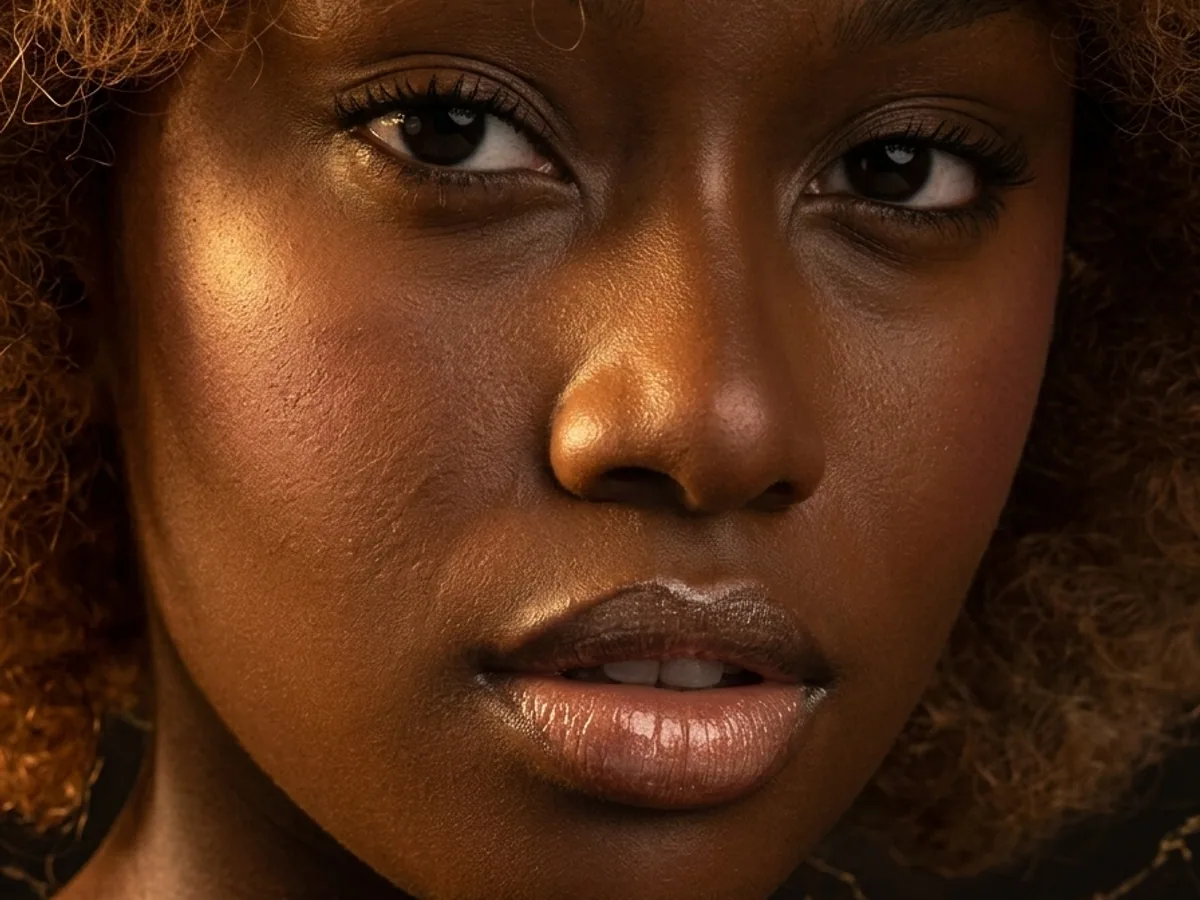
The lips of Black and Brown women are often naturally two-toned and pigmented: we never lighten them, we harmonise them. Gloss is their best friend.
- Finding your nude. A nude isn't a single colour: it's the shade of your own lips, slightly brighter. On Black skin, a light beige "nude" greys the mouth. Look for caramel, mocha, rosy brown, soft plum.
- Two-toned lips. If your upper lip is darker than your lower lip, a tinted gloss slightly deeper on the lighter lip is enough to harmonise. A liner in the shade of the darker lip, blended into the centre, gives the same result.
- The colours that flatter. Orange, brick, burgundy, plum, violet: Black and Brown women wear colours nobody else wears as well.
- Gloss. It brings the light and dimension that matte takes away. Our NEW BLACK gloss comes in five shades, from luminous sheer (Eau de Coco) to deep colours (Safou, Maracuja), with warm tones in between (Datte, Mangue).
Makeup according to your skin
There is no single "Black skin". Here is what really changes with your complexion, your skin type and your age.
- Mixed-heritage skin. The challenge isn't depth but undertone, often strongly olive or golden, and being "between two shades" in most ranges. Test on the jawline in daylight, prefer the shade closest to your neck, and correct with powder if needed.
- Olive and tan skin (Mediterranean, North African, South Asian). Often olive or warm golden undertone, tendency to shine. Avoid pink foundation and silver highlighter; choose peach, coral or brick blushes.
- Very dark skin. The main risk is the grey veil: foundation exactly in your shade (never lighter), a deep tinted powder, a copper or bronze highlighter. Bright colours are yours: hibiscus, orange, plum, violet.
- Oily skin. Light mattifying primer on the T-zone only, long-wear foundation, compact powder for touch-ups. Never powder on the cheeks.
- Dry skin. Moisturise five minutes before, satin fluid foundation, no powder except on the nose, cream highlighter rather than powder.
- Mature skin (50 and over). The skin loses hydration and contrast. We reveal, we don't cover: thin, luminous foundation, blush placed high, satin highlighter rather than glitter, comfortable gloss. Full matte and too much powder settle into lines.
- Dark spots and hyperpigmentation. A concealer half a shade deeper than your foundation, applied only on the spot and tapped in, then foundation over it in a thin layer. Never try to "lighten" the area: you even out towards your shade, not towards lighter.
Makeup according to the occasion
The technique doesn't change; the intensity and the wear do.
- Every day, natural. Foundation in a thin layer, powder on the T-zone, blended blush, gloss. Ten minutes. Our guide: Natural makeup on Black skin.
- Brides and ceremonies. Trial six weeks before, in daylight and with flash. No-transfer foundation (the dress, the hugs, the tears), setting powder, satin highlighter. Touch-up kit: compact powder, gloss. Our guide: Bridal makeup for Black skin.
- Evenings, church, big occasions. Go up a notch on blush and lips, add light to the inner corner of the eye. In strong heat: thin layers and no-transfer, never a thick layer. Our guide: Evening makeup for Black skin.
- Photos and video. Flash reveals white powder and silver highlighter. Tinted powder, golden highlighter, a touch more blush than usual.
- Brown eyes. Copper, bronze, plum, deep green and gold shadows make brown eyes stand out on olive and Black skin; flat black switches them off. Our guide: Enhance your brown eyes.
The 10 most common mistakes on Black skin
- Choosing a foundation lighter than your skin "to brighten".
- Testing the shade on the hand or wrist instead of the jawline.
- Doing your makeup under yellow bathroom light.
- Using a white translucent powder.
- Powdering the whole face, cheeks included.
- A pale pink blush, or blush applied too low on the cheek.
- A white or silver highlighter.
- A light beige nude on the lips.
- Forgetting the neck, the ears and the line at the hairline.
- Not moisturising first, then compensating with more product.
What NEW BLACK does
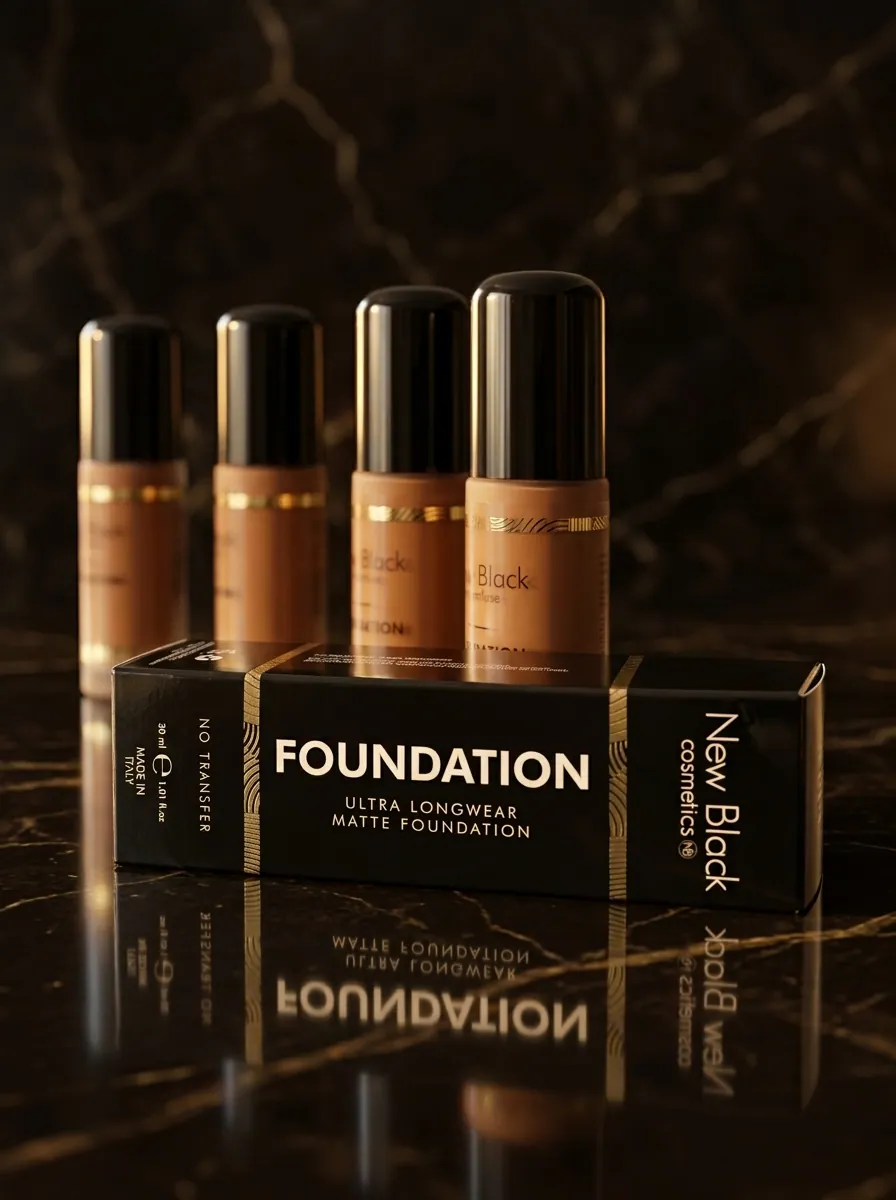
NEW BLACK is a French makeup house designed in Paris, specialising in Black and Brown skin tones. We don't "also" make deep shades: they are all we make.
- No-transfer fluid foundation: 6 shades from light to deep, matte finish, all-day wear without marking clothes or headwraps. Rated 4.9/5 by 24 customers.
- Compact powder: sets and mattifies without a white cast, in the foundation shades.
- Blush: 4 saturated shades (Fleur Corail, Fleur Bissap, Fleur Anthurium, Fleur Strelitzia).
- Highlighter: 3 reflections from gold to copper (Éclipse, Constellation, Aurore australe).
- Gloss: 5 shades, from luminous sheer to deep colour, with a discount from two.
- Gift set: 2 glosses of your choice and a wax bracelet.
Unsure about your shade? Write to us with a photo taken in daylight and our team will answer, and our Shade guide helps you choose.
Discover the range: NEW BLACK shop.
Our guides to makeup for Black skin
- The ultimate makeup kit for Black skin — the 8 products, the order to buy in, three budgets.
- Natural makeup on Black skin — the luminous nude in 6 steps.
- Enhance your brown eyes — the colours that make the eyes stand out on olive and Black skin.
- Bronzer and contouring on Black skin — sculpt without looking muddy.
- Black makeup artists and beauty creators to follow — who to follow, for which style.
- Foundation for Black skin: how to choose the right one — shade, undertone, finish, wear.
- Transfer-proof foundation: how it works — and which one to choose.
- Know your undertone — the 3-minute test.
- Foundation that turns grey or ashy — the 6 causes and their fixes.
- Blush, highlighter and contouring for Black skin — sculpt and illuminate.
- Blush for Black skin: which colour to choose — coral, plum, orange, by undertone.
- Lip makeup for Black skin — nude, gloss, colour.
- Lip gloss for Black skin: which colour — the five colours that work.
- Bridal makeup for Black skin — the guide to the big day.
- Makeup for mature Black skin — reveal, don't cover, after 50.
- Makeup for mixed-heritage skin — shades, undertones, mistakes to avoid.
- Makeup for olive and tan skin — the guide.
- Powder for Black skin — compact, loose, mattifying.
- Highlighter for Black skin — which colour, where to apply it.
- Nude lips for Black skin — finding your nude.
- Evening makeup for Black skin — wear, glow and colours that show.
- Back-to-work makeup for Black skin — the office routine after summer.
- NEW BLACK shade guide — find your shade in 3 minutes.
Frequently asked questions
What makeup is best for Black skin?
A foundation built on brown or orange pigments (not pink), in the exact shade of your skin, a tinted powder on the T-zone only, a saturated blush (coral, hibiscus, plum), a golden or bronze highlighter and a gloss in a warm nude. The rule: reveal the skin, don't cover it.
How do I stop my foundation looking grey or ashy?
Take your exact shade, never lighter; check your undertone (green veins = warm, blue = cool); replace white translucent powder with a tinted powder; moisturise five minutes before. These four steps remove the grey cast in the vast majority of cases.
What colour blush for Black skin?
Coral, orange and terracotta for warm undertones; raspberry, fuchsia and plum for cool undertones; brick and hibiscus for neutrals. The deeper the skin, the brighter the colour can be in the pan: once blended, it gives a naturally flushed cheek.
Is this makeup good for dark skin, or only for lighter Brown skin?
Both. The six foundation shades run from light brown to very deep, and the blush, highlighter and gloss pigments were chosen to show on the deepest complexions. The deeper the skin, the more the saturated colours and copper reflections work in your favour.
Matte or luminous foundation for Black skin?
Matte or velvet if your skin shines (the most common case) or for a long day; satin if your skin is dry or mature. Either way, the light then comes from the highlighter, not from a lighter foundation.
How do I make makeup last all day in the heat?
Thin layers rather than one thick one, no-transfer foundation, compact powder on the T-zone, a powder touch-up at midday. Avoid very rich creams right before makeup.
Mixed-heritage skin: how do I find my shade?
Test three neighbouring shades on the jawline, by a window, and wait ten minutes. Choose the one closest to your neck. If you're between two, take the deeper one and adjust with powder.
Can you wear makeup at 60 with Black skin?
Of course, and often better than at 20: mature Black skin keeps its texture and its colour. You simply adapt: thin satin foundation, powder only on the nose, blush placed high, satin highlighter (not glitter), comfortable gloss.
Which makeup brand should I choose for Black skin?
Look at three criteria: is the shade range built from light to deep with undertones, or simply "darkened" at the end? Does the brand show its products on real Black and Brown skin, in daylight? Are there many precise reviews from customers who look like you? A specialist brand answers yes to all three.
Written by the NEW BLACK editorial team · Reviewed by Charlotte Mambo, NEW BLACK makeup artist · Updated 9 September 2026