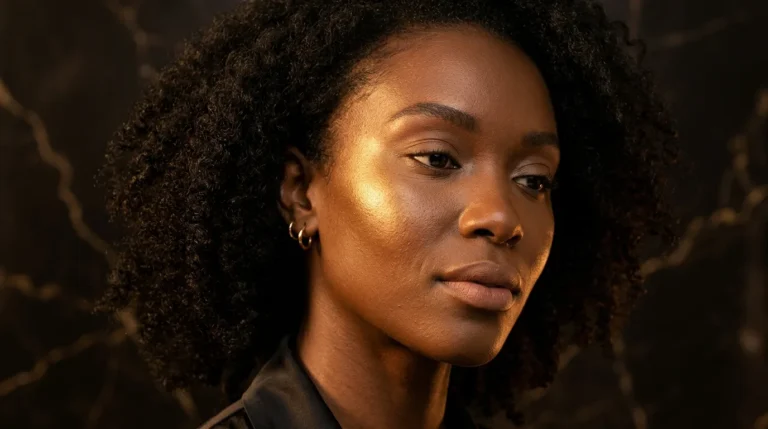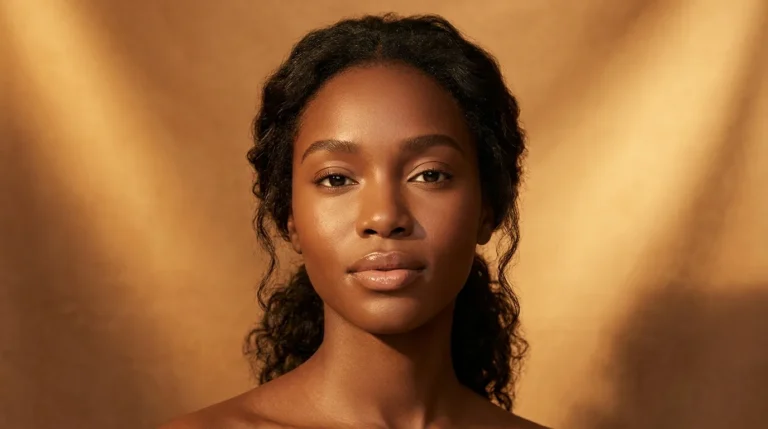


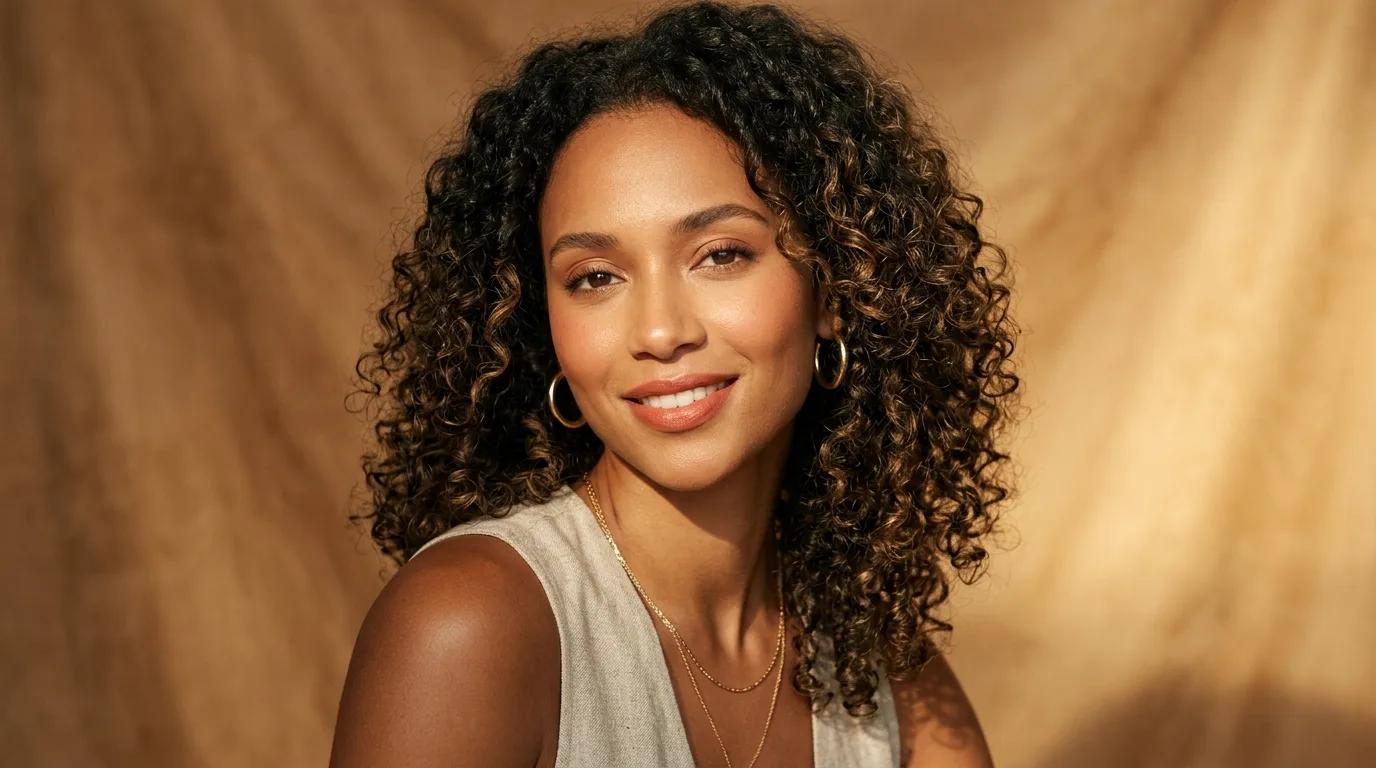
A NEW BLACK guide, the Paris makeup brand made for Black and Brown skin tones, reviewed by Charlotte Mambo, the brand's makeup artist.
The challenge of mixed-heritage skin isn't depth but undertone, often strongly olive or golden, and falling "between two shades" in most ranges. The answer comes down to three rules: choose the shade closest to your neck, check the undertone before the depth, and prefer peaches, corals and bricks to pale pinks. Here's how to make up light or deep mixed-heritage skin, without a grey or orange cast.
This article is part of our complete guide to makeup for Black and Brown skin.
Mixed-heritage skin: what makes it particular
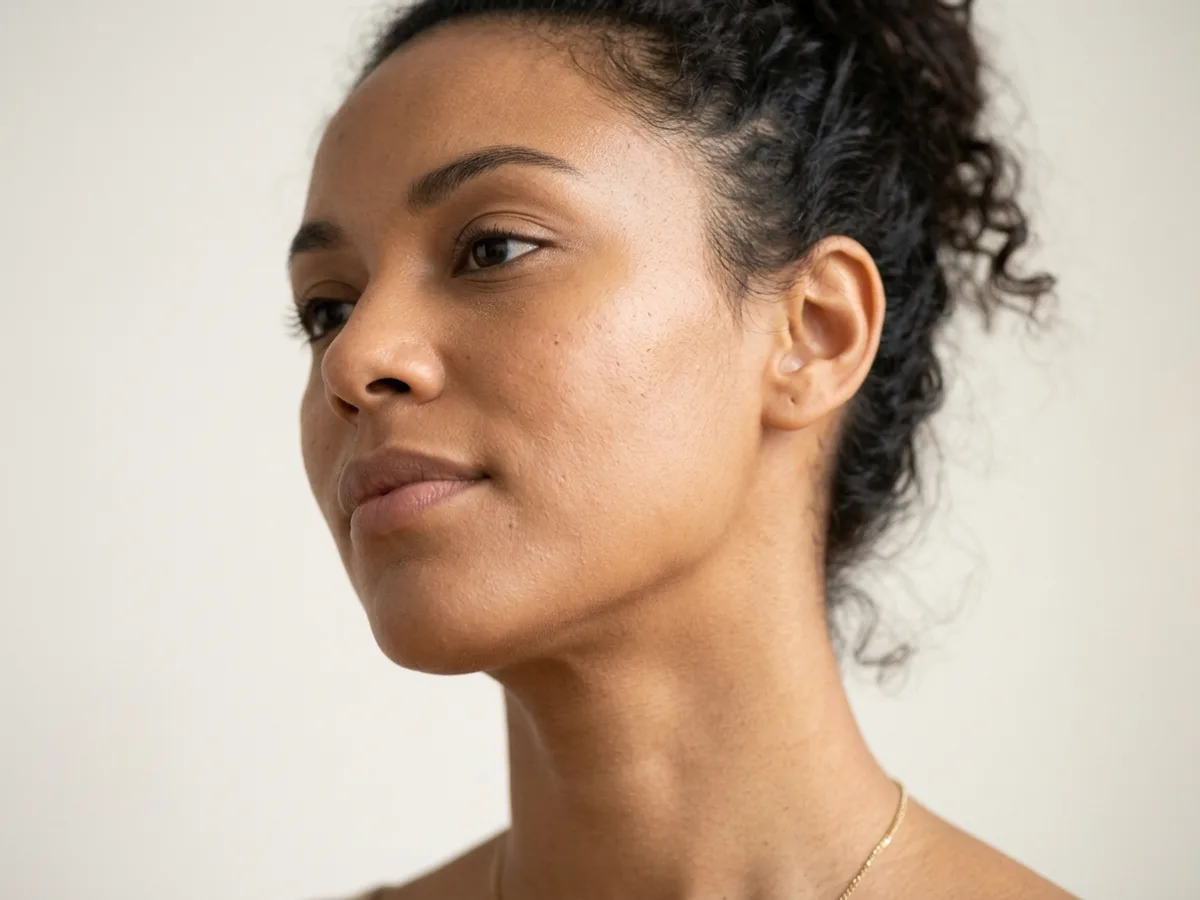
Mixed-heritage skin often combines an olive or golden undertone, a T-zone that shines, cheeks lighter than the forehead, and a neck lighter than the face. It also changes depth with the seasons.
Consequences: "beige" (pink) foundations turn it grey; warm "caramel" foundations can turn it orange; and a shade that's perfect in winter can be too light in summer. Makeup for mixed-heritage skin is above all a matter of undertone and season.
Undertone first
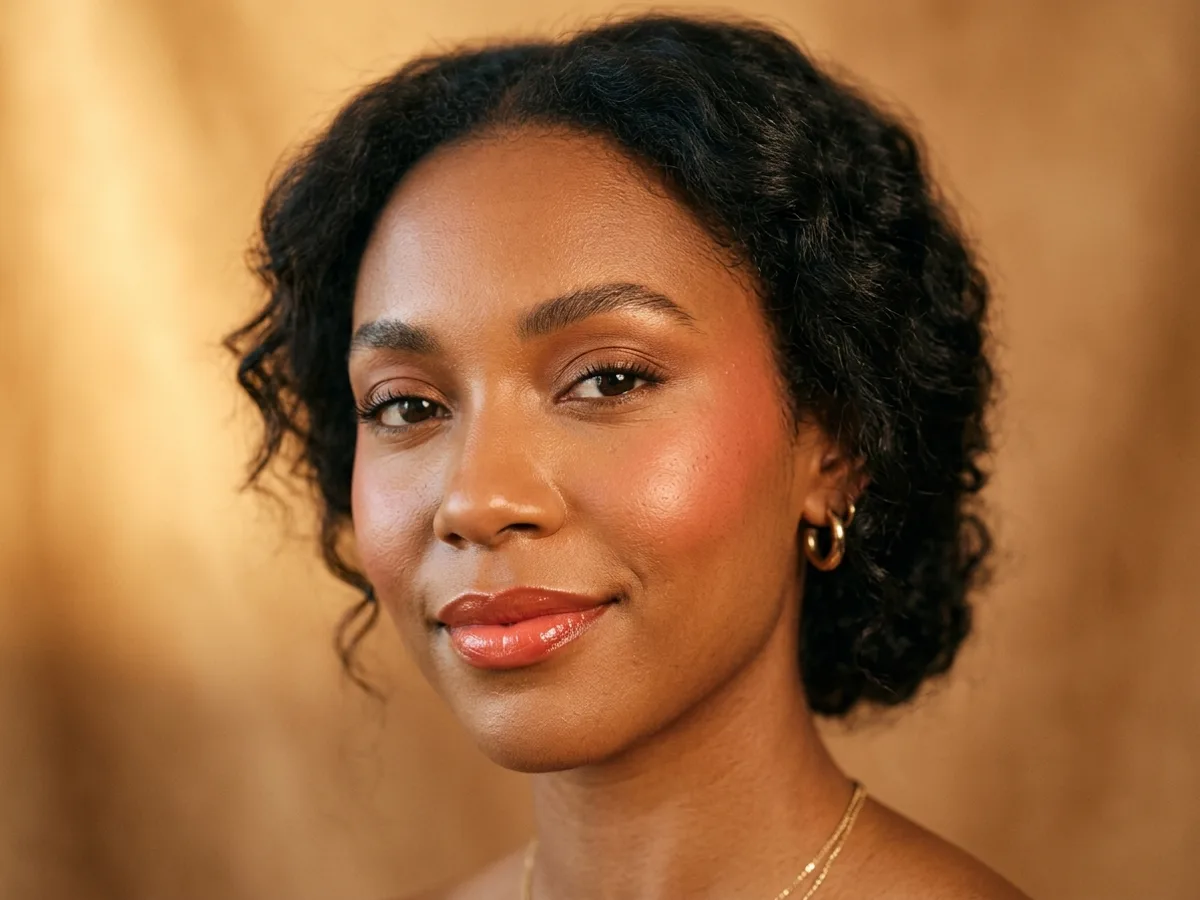
Olive (greenish, grey-green against white fabric), golden (peachy against white fabric), or neutral: that's what decides the shade. Three tests in three minutes: Know your undertone. On mixed-heritage skin, the olive undertone is common and often ignored by ranges: look for "neutral" or "soft golden" shades, avoid pink ones.
Foundation: "between two shades"
Test three neighbouring shades on the jawline, in daylight, ten minutes. Keep the one closest to your neck. Between two, take the deeper one and adjust with powder, or mix the two.
- Light mixed-heritage skin: often Trois-Îlets or Santa Maria at NEW BLACK, depending on the undertone.
- Medium mixed-heritage skin: Santa Maria or Kribi.
- Deep mixed-heritage skin: Kribi or Moanda.
- Summer / winter: it's normal to have two neighbouring shades, or to mix.
The finish: velvet if the T-zone shines (the most common case), satin if the skin is dry. Full guide: Foundation for Black skin and Shade guide.
Correct without greying
Peach concealer under the eyes (the under-eye circles of mixed-heritage skin often lean green-grey), concealer in the exact shade on dark spots. A light concealer on olive skin turns grey.
Powder, blush, light
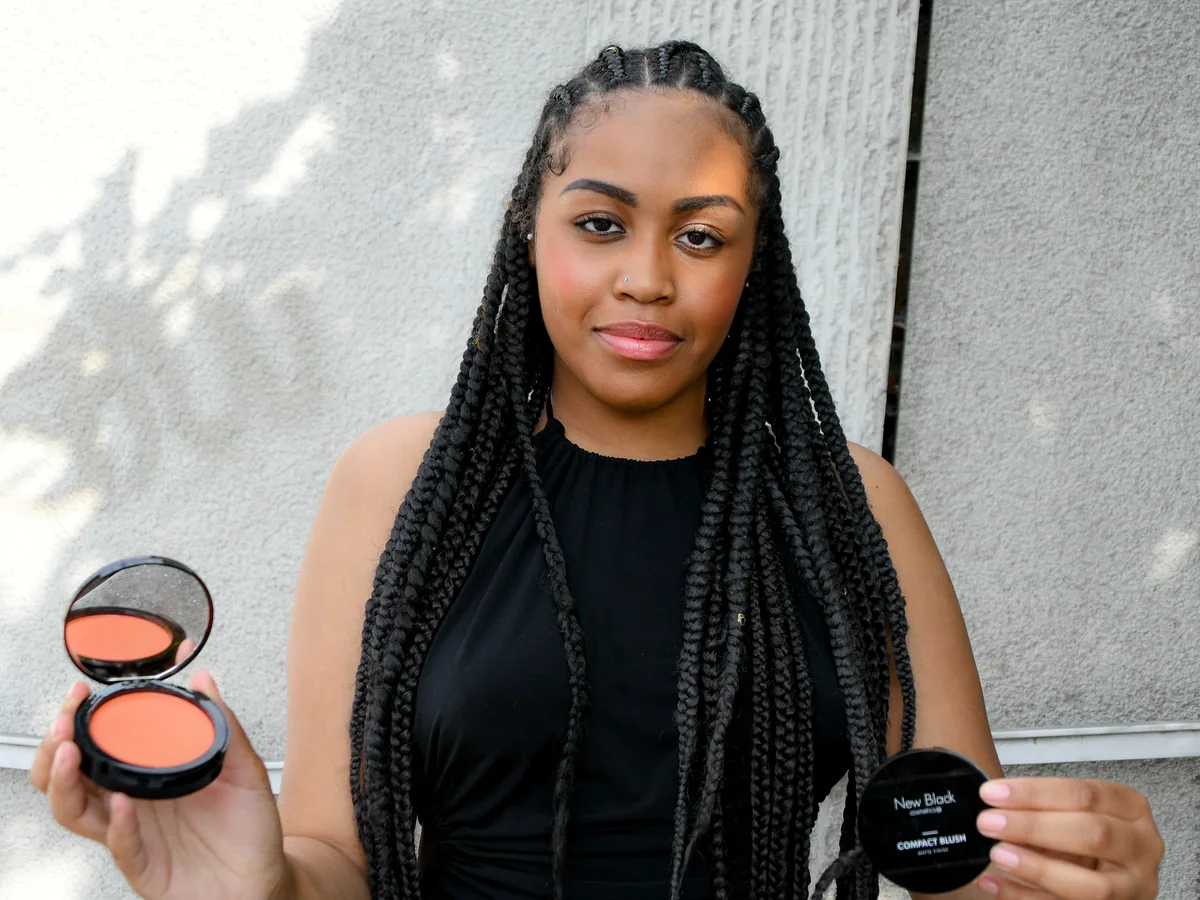
- Powder: tinted, T-zone only. A translucent one makes a grey veil on olive skin. See Powder for Black skin.
- Blush: peach, coral, brick, terracotta on a golden or olive undertone; raspberry on a cool undertone. Pale pinks disappear. See Blush for Black skin: which colour.
- Highlighter: light gold or golden champagne; never silver.
- Lips: caramel or brown-peach nude, luminous sheer gloss. See Lip gloss for Black skin: which colour.
Mistakes to avoid
- Choosing a pink "beige" shade: grey.
- Choosing a "caramel" shade that's too warm on an olive undertone: orange.
- Keeping the same shade all year round.
- Testing on the hand.
- Pale pink for blush and lips.
- Silver highlighter.
What NEW BLACK does
Our six shades of no-transfer fluid foundation cover light to deep mixed-heritage complexions with readable undertones; the compact powder lets you adjust "between two". Fleur Corail blush and Datte gloss are the safe bets for mixed-heritage skin. Not sure? Send us a photo taken by a window: we'll tell you which shade to test.
Frequently asked questions
What foundation for mixed-race skin?
A shade in your undertone (often olive or golden), the one closest to your neck, tested on the jawline in daylight. Between two, the deeper one, adjusted with powder.
What colour blush for mixed-heritage skin?
Peach, coral, brick or terracotta on a golden or olive undertone; raspberry on a cool undertone. No pale pink.
Light mixed-heritage skin: what makeup?
Thin foundation in the right undertone, tinted powder on the T-zone, coral blush, light golden highlighter, caramel nude gloss.
Do I need to change shade in summer?
Often, yes: a neighbouring deeper shade, or a mix of the two.
Mixed-heritage skin: how do I avoid the orange cast?
By checking the undertone: a foundation that's too golden on olive skin turns orange. Look for "neutral" or "soft golden".
Written by the NEW BLACK editorial team · Reviewed by Charlotte Mambo, NEW BLACK makeup artist · Updated 9 September 2026