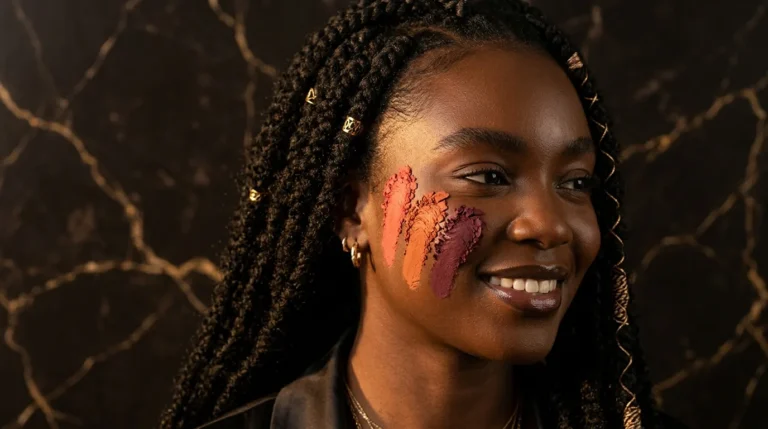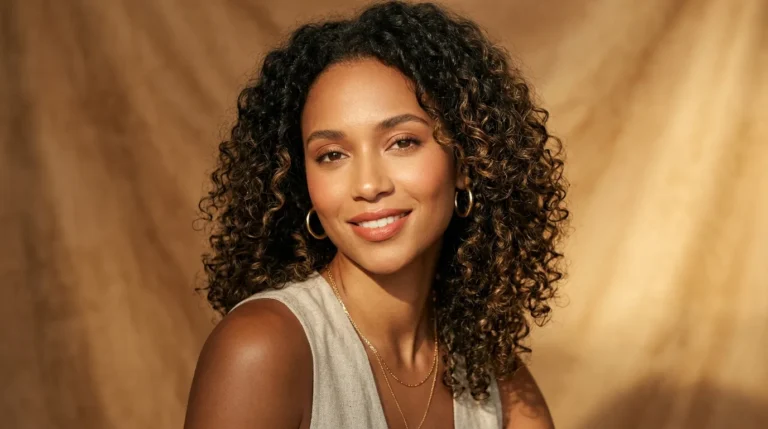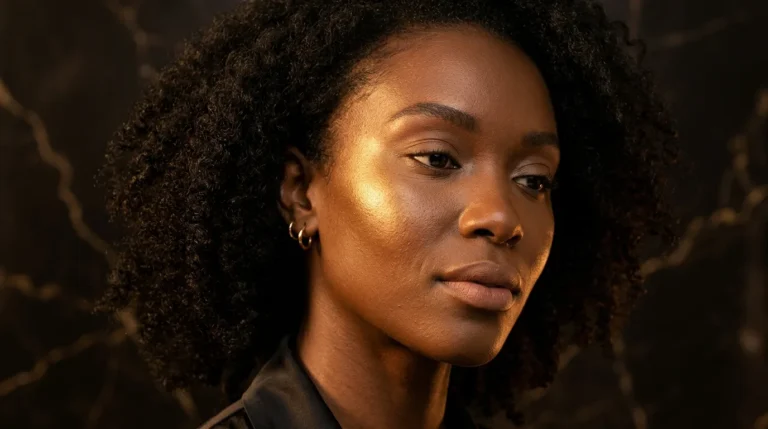


A NEW BLACK guide, the Paris makeup brand made for Black and Brown skin tones, reviewed by Charlotte Mambo, the brand's makeup artist.
The undertone is the hue that lives beneath the surface of your skin: warm (golden, red-brown), cool (pink, bluish), neutral (both) or olive (greenish). It doesn't depend on the depth of your complexion, and it's what decides whether a foundation suits you or turns grey or orange. Four tests are enough, without makeup, by a window. Then we translate the result into a shade.
This article is part of our guide to foundation for Black skin.
Complexion and undertone: not the same thing
Complexion is depth (from light to deep). Undertone is temperature (warm, cool, neutral, olive). Two women with the same complexion can have opposite undertones, and therefore different foundations.
It's the most common confusion: you choose a shade "as deep as my skin" without checking whether it leans golden or pink. The depth is right, the undertone isn't, and the complexion looks dull, grey or orange. Conversely, with the right undertone, a shade slightly off in depth blends in.
The 4 undertones on Black and Brown skin
| Undertone | What you see | What suits you | Common in |
|---|---|---|---|
| Warm | Golden, copper, red-brown reflections | Gold, cream and orange fabrics, coral | Many caramel, copper, mahogany complexions |
| Cool | Pink, bluish, plum reflections | Silver, pure white, fuchsia and plum | Very dark bluish skin, rosy-brown skin |
| Neutral | Neither clearly golden nor pink | Both metals; most colours | All complexions |
| Olive | Greenish or grey-green reflections | Gold, warm tones; avoid pink | Mixed-heritage, olive, South Asian skin, some dark skin |
The myth to forget: "Black skin = warm undertone". A good share of Black skin is neutral or cool, and many mixed-heritage complexions are olive. A "warm" foundation by default is the reason for many orange complexions.
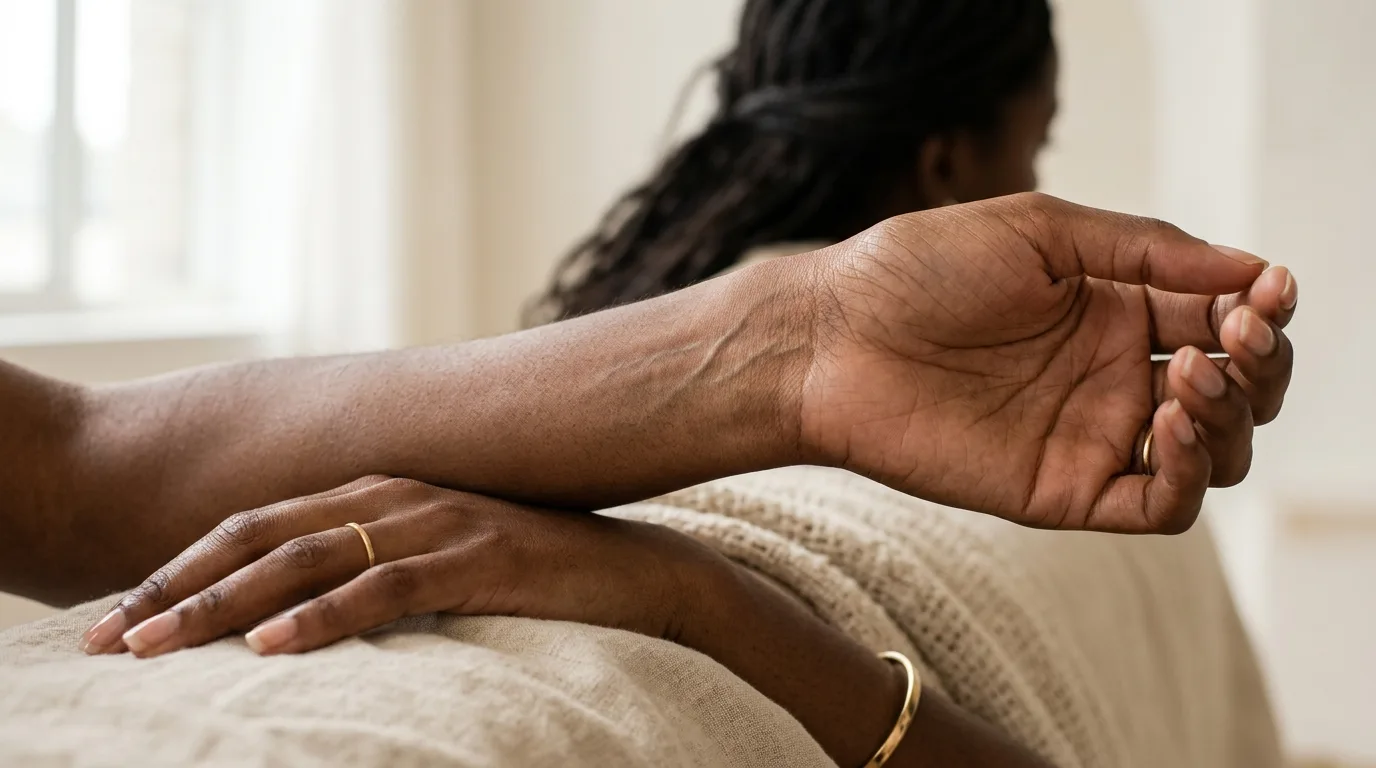
Test 1: the veins on your wrist
Look at the inside of your wrist in daylight. Greenish veins: warm. Blue or purple: cool. Both, or hard to say: neutral. Greenish with skin that looks grey next to white fabric: olive.
On very dark skin, the veins are less visible: move on to tests 2 and 3.
Test 2: jewellery
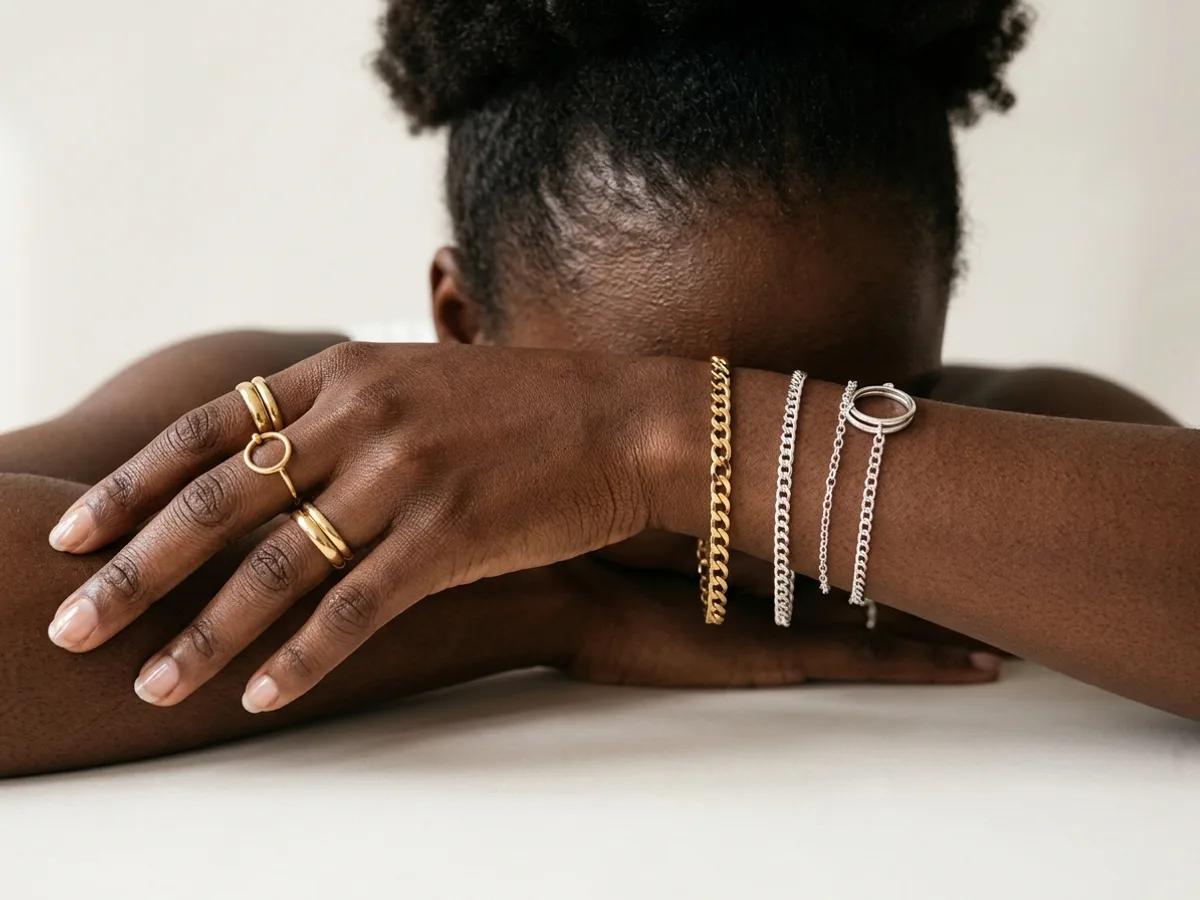
Place a gold piece and a silver piece against bare skin. Gold lights you up and silver dulls you: warm. Silver suits you better: cool. Both work: neutral.
This is the most reliable test on very dark skin. Look at the effect on the face, not just how pretty the jewellery is.
Test 3: white fabric
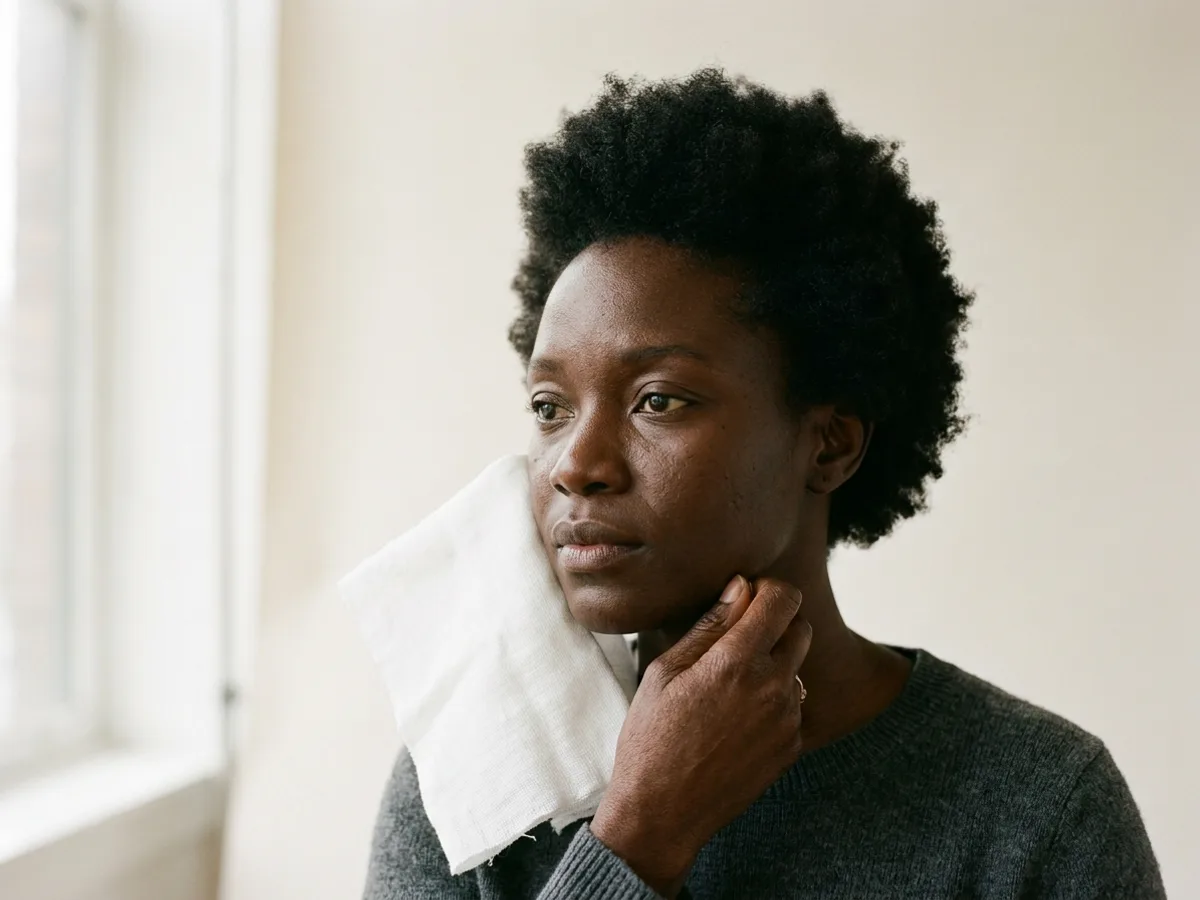
Hold a pure white sheet or T-shirt against your face, without makeup, by a window. The skin looks golden or peachy: warm. Pink or bluish: cool. Greenish or greyish: olive. Neither: neutral.
Compare with a cream (off-white) fabric: if cream suits you better than pure white, you're warm or olive; if pure white suits you better, you're cool.
Test 4: the sun
Your skin turns golden and darkens without going red: warm or olive. It goes red first, or darkens towards grey-red: cool or neutral.
Less precise than the first three, but it confirms. Two matching tests are enough; if in doubt between two, you're probably neutral.
Translating your undertone into a NEW BLACK shade
Once the undertone is known, you choose the depth: three neighbouring shades on the jawline, ten minutes, the one that disappears. The table below is a starting point; the jawline test remains decisive.
| Undertone | Reference | NEW BLACK shades to test first |
|---|---|---|
| Warm, light to medium complexion | Golden, caramel | Trois-Îlets, Santa Maria |
| Warm, medium to deep complexion | Copper, mahogany | Moanda, Assinie |
| Neutral, medium complexion | Neither golden nor pink | Kribi, Moanda |
| Neutral to cool, deep complexion | Rosy brown, bluish | Assinie, Saly |
| Olive, mixed-heritage or tan | Greenish, subtle gold | Trois-Îlets, Kribi |
Our six shades, from light to deep: Trois-Îlets, Santa Maria, Kribi, Moanda, Assinie, Saly. Equivalents with other brands are in the Shade guide, and our team replies to a photo taken by a window.
And for blush, highlighter and lips?
The undertone also guides colours: warm → coral, orange, gold, caramel; cool → raspberry, plum, rose-gold, mocha; neutral → brick, hibiscus, bronze; olive → peach, terracotta, gold.
Details by product are in our complete guide to makeup for Black and Brown skin: blush, highlighter and gloss are covered by undertone.
The 4 undertone mistakes
- Assuming Black skin = warm.
- Testing foundation on the hand (lighter, often a different undertone).
- Trusting bathroom light (yellow: everything looks warm).
- Looking for depth before undertone.
What NEW BLACK does
Our six shades of no-transfer fluid foundation were built with readable undertones, from light to deep, on pigments designed for Black and Brown skin tones. Not sure? Send us a photo taken by a window, without makeup, and we'll tell you which shade to test. Designed in Paris, made in Italy.
Frequently asked questions
How do I know if I have a warm or cool undertone with dark skin?
Greenish veins, gold suits you, skin looks golden against white fabric: warm. Blue veins, silver suits you, skin looks pink: cool. Both: neutral. Two matching tests are enough.
Can very dark skin have a cool undertone?
Yes, it's common: very dark skin with bluish or plum reflections is cool. A warm foundation by default makes it look orange.
What is an olive undertone?
A greenish or grey-green undertone, common on mixed-heritage, olive and South Asian skin. It calls for soft golden or neutral shades and doesn't take pink well.
Does the undertone change with a tan or with age?
Depth changes (in summer, with age); undertone stays. You may need a deeper shade in summer, in the same undertone.
Do I need to know my undertone to choose a foundation?
Yes: it's the first criterion. A shade at the right depth but the wrong undertone turns grey or orange.
Written by the NEW BLACK editorial team · Reviewed by Charlotte Mambo, NEW BLACK makeup artist · Updated 9 September 2026