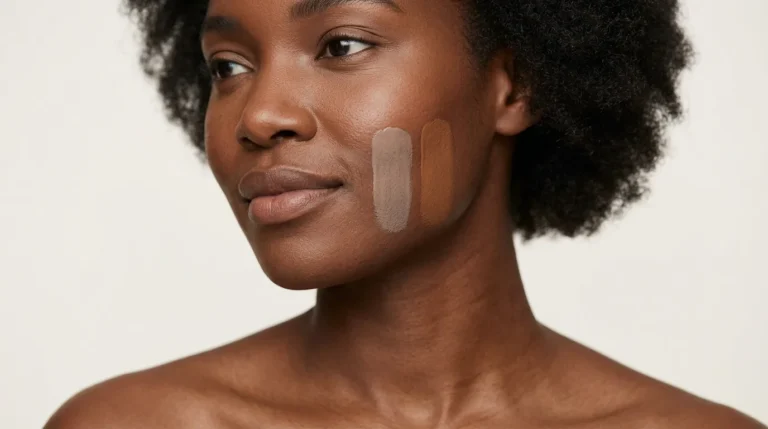


A NEW BLACK guide, the Paris makeup brand made for Black and Brown skin tones, reviewed by Charlotte Mambo, the brand's makeup artist.
A transfer-proof foundation forms, as it dries, a thin film that bonds to the skin instead of sitting on the surface: once applied, it doesn't migrate onto collars, headwraps, your phone, or the cheeks of the people you hug. It doesn't dry out the skin if it was moisturised first, it lasts all day without touch-ups, and it changes life for Black and Brown skin: light clothes, headwraps, ceremonies, heat. Here's how it works, how to choose it and how to apply it so it really keeps its promise.
This article is the first satellite of our guide to foundation for Black skin.
What is a "transfer-proof" foundation, concretely?
It's a formula that contains film-forming agents: as the water or volatile oils evaporate, they leave a veil of pigments fixed to the skin, dry to the touch, that resists rubbing. Hence the technique to know: you let it dry one to two minutes before touching, powdering or putting on clothes.
A classic foundation stays "mobile" on the surface: that's what makes it comfortable, but also what makes it migrate onto a collar, fade under a mask, or mark a pillow. Transfer-proof trades a little of that flexibility for wear. Well formulated and well applied, it stays comfortable; badly applied (thick layer, dry skin not moisturised), it can feel tight or settle into lines.
Transfer-proof, long-wear, waterproof: not the same thing
| Claim | What it promises | What it doesn't promise |
|---|---|---|
| Transfer-proof | Doesn't migrate onto fabrics or with rubbing | Not necessarily resistant to water or heavy sweat |
| Long-wear (12 h, 24 h) | Stays in place over time, without touch-ups | Can transfer with rubbing; "24 h" is a lab figure |
| Waterproof / water-resistant | Resists water, tears, sweat | Can transfer once dry onto fabric; often drier |
| Matte | Absorbs shine | Nothing about wear or transfer |
The best compromise for Black skin every day: transfer-proof + long-wear + velvet finish, which covers the working day, heat and clothes. Waterproof is reserved for weddings, expected tears and extreme summer.
Why it's precious on Black skin
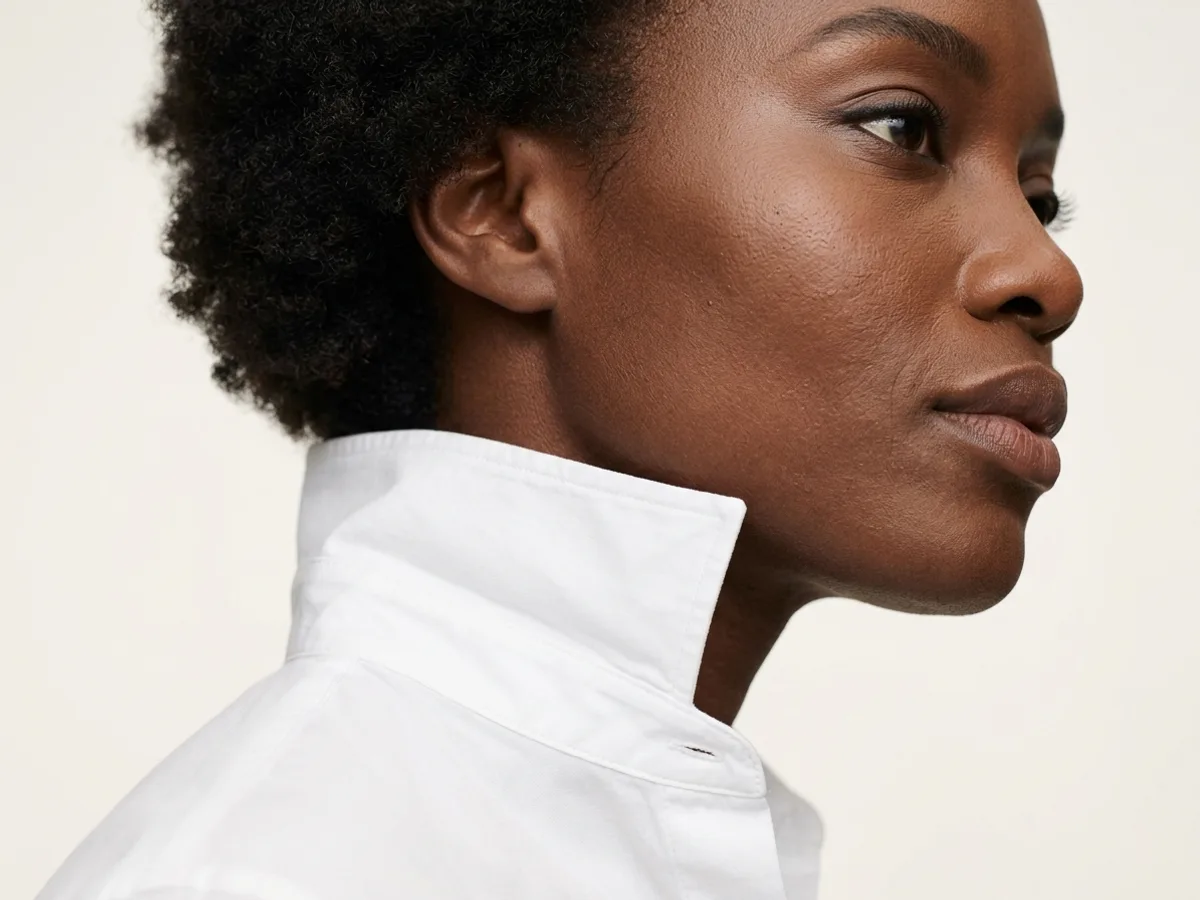
Because transfer shows more: a brown mark on a white collar, a headwrap, a light shirt, a ceremony shawl. And because the occasions when you wear makeup are often long and hot: weddings, church, christenings, family celebrations.
Three situations where our customers never go back:
- Light clothes and collars: no more marks on shirt collars or turtlenecks.
- Headwraps and wigs: the edge of the wrap stays clean, the lace doesn't get tinted.
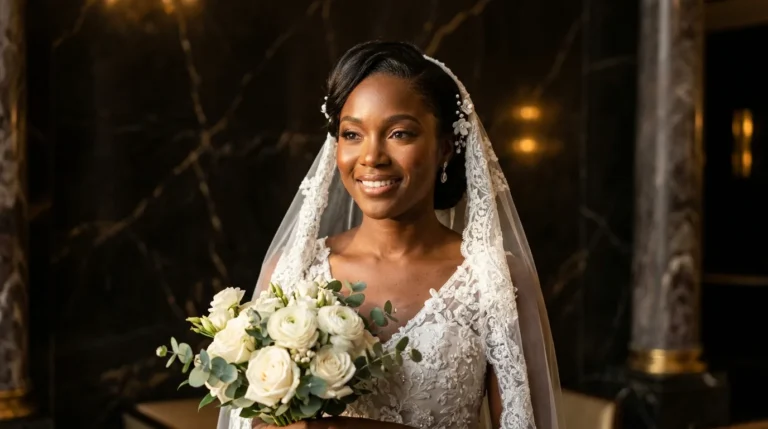
- Ceremonies: hugs, tears, heat, photos: the complexion stays in place until the evening.
The comment that comes up most often about our foundation: "it doesn't stain my collar". Along with the shade, it's also the first reason for buying cited by our customers aged 40 and over.
How to apply it so it really doesn't transfer
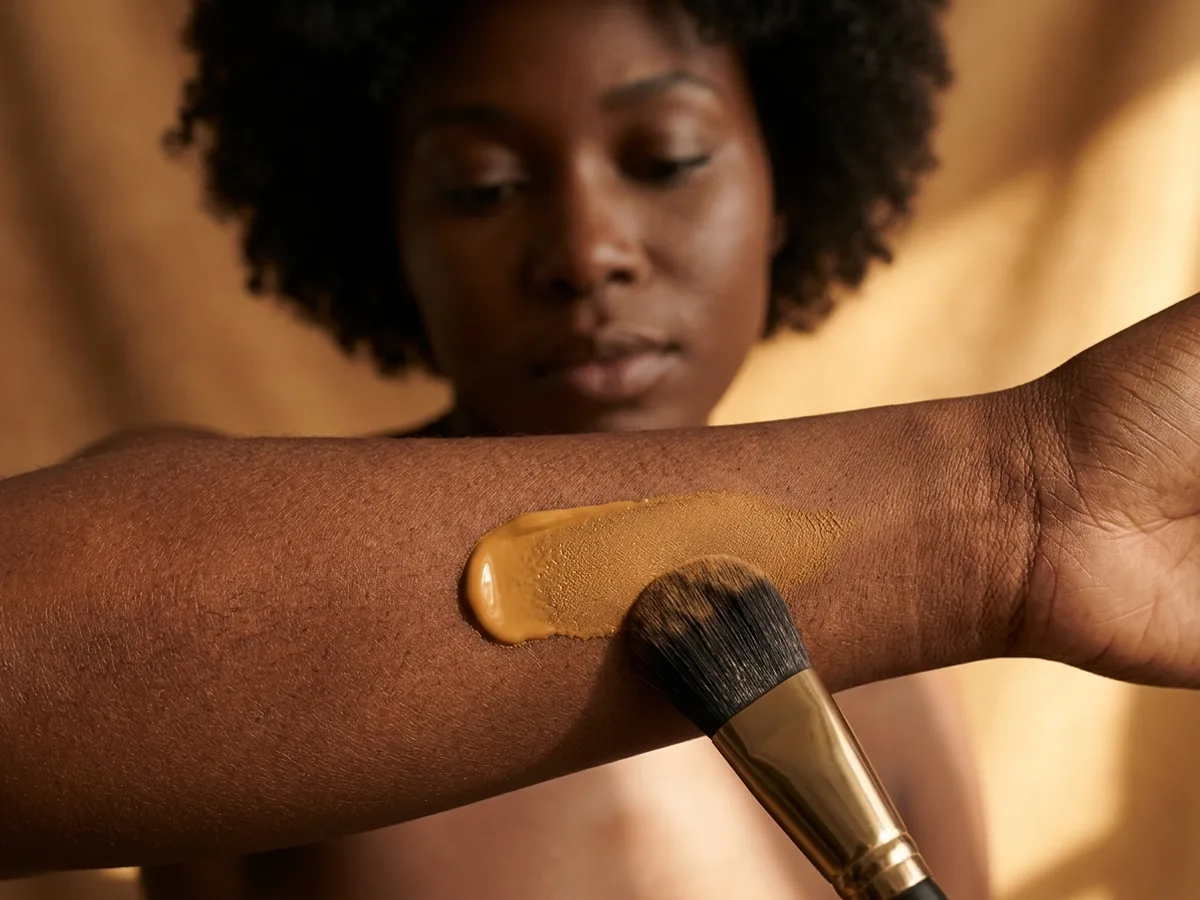
Moisturise, wait, apply thin, let dry, powder lightly. Five steps, in that order.
- Moisturise five minutes before. Dehydrated skin "drinks" the foundation and makes it cling; hydrated skin lets it spread thin.
- Apply a hazelnut for the whole face, with a damp sponge or a brush, from the centre outwards. Thin. A second touch only on the areas that need evening out.
- Let it dry one to two minutes without touching: that's when the film forms.
- Powder lightly on the T-zone with a tinted powder (never white translucent). Powder locks and mattifies without thickening.
- Wait before pulling on a top over your head: or put it on before your makeup.
What you don't do: a thick layer (it cracks and transfers anyway), foundation on dry skin that hasn't been moisturised, a setting mist right after application (it reactivates the film).
How to remove it without stressing the skin
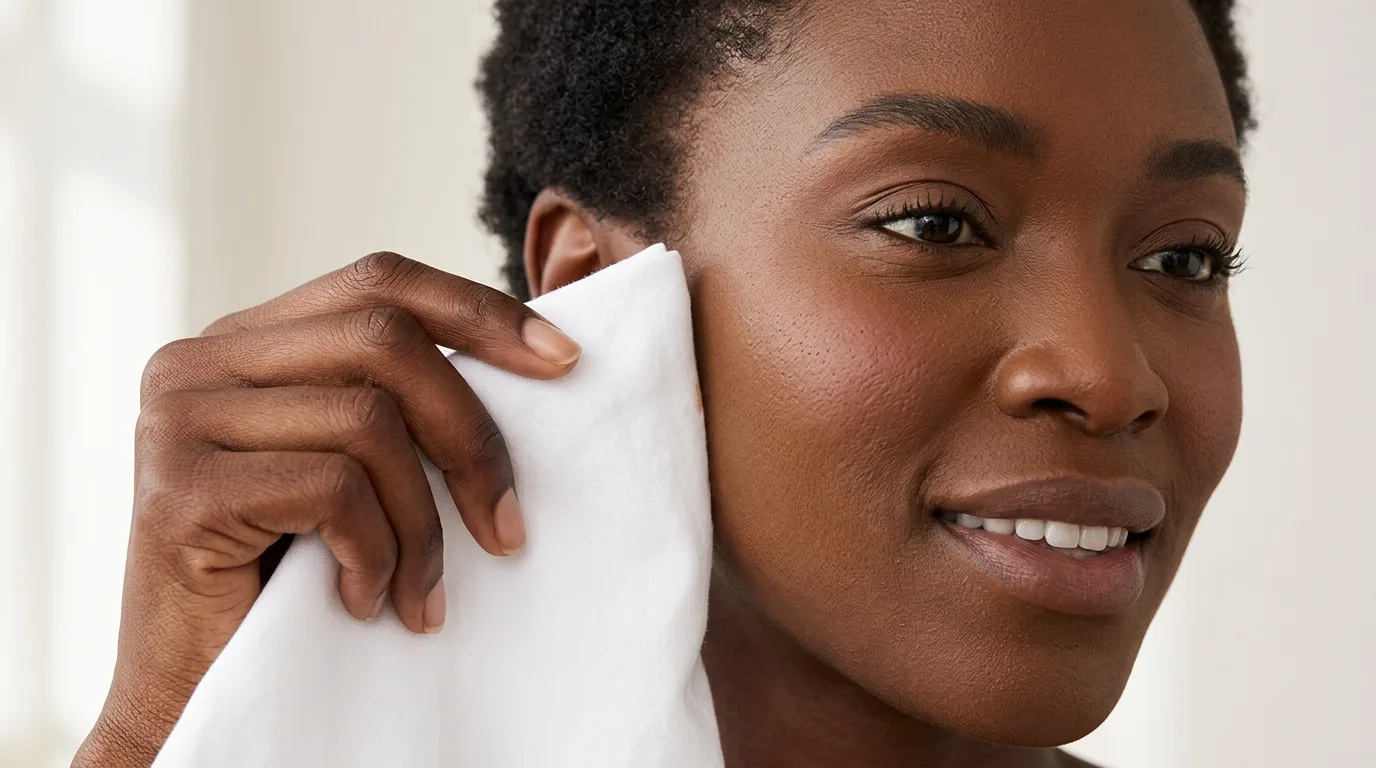
An oil-based makeup remover or a balm, massaged for thirty seconds, then a gentle cleanser. Never rubbing or dry cotton.
A film that resists rubbing dissolves with an oil, not with water. Double cleansing (oil then cleanser) removes everything in a minute, without pulling on the skin. In the evening, moisturiser makes up for the day.
The criteria for choosing
Shades first, then finish, then comfort, then ingredients.
- The shade range: built from light to deep, with undertones; a "transfer-proof" that doesn't exist in your shade is useless. See our shade guide.
- The finish: velvet or matte for combination to oily skin; satin for dry skin, if the formula exists.
- Comfort: a fluid texture that works thin. Test on the jawline, wait ten minutes (the real shade and comfort show after drying).
- Ingredients: fragrance-free if your skin is reactive; enriched with hydrating agents if it's dry.
- The claimed wear: read "transfer-proof" as a property of the formula, not as a 24-hour promise; real wear depends mostly on application and your skin.
Oily, dry, mature skin: what changes
- Oily skin: transfer-proof is your best friend; mattifying primer on the T-zone, tinted powder, a powder touch-up at midday if needed. No foundation touch-up on top (it thickens). Our guide: Foundation for oily Black skin.
- Dry skin: generous moisturising, very thin application, powder only on the nose; if the skin feels tight, a drop of light oil mixed into the hazelnut of foundation.
- Mature skin: thin layer, never full matte; powder stays on the nose; satin highlighter brings the light.
- Light mixed-heritage skin: same method; watch the undertone (often olive or golden).
What NEW BLACK does
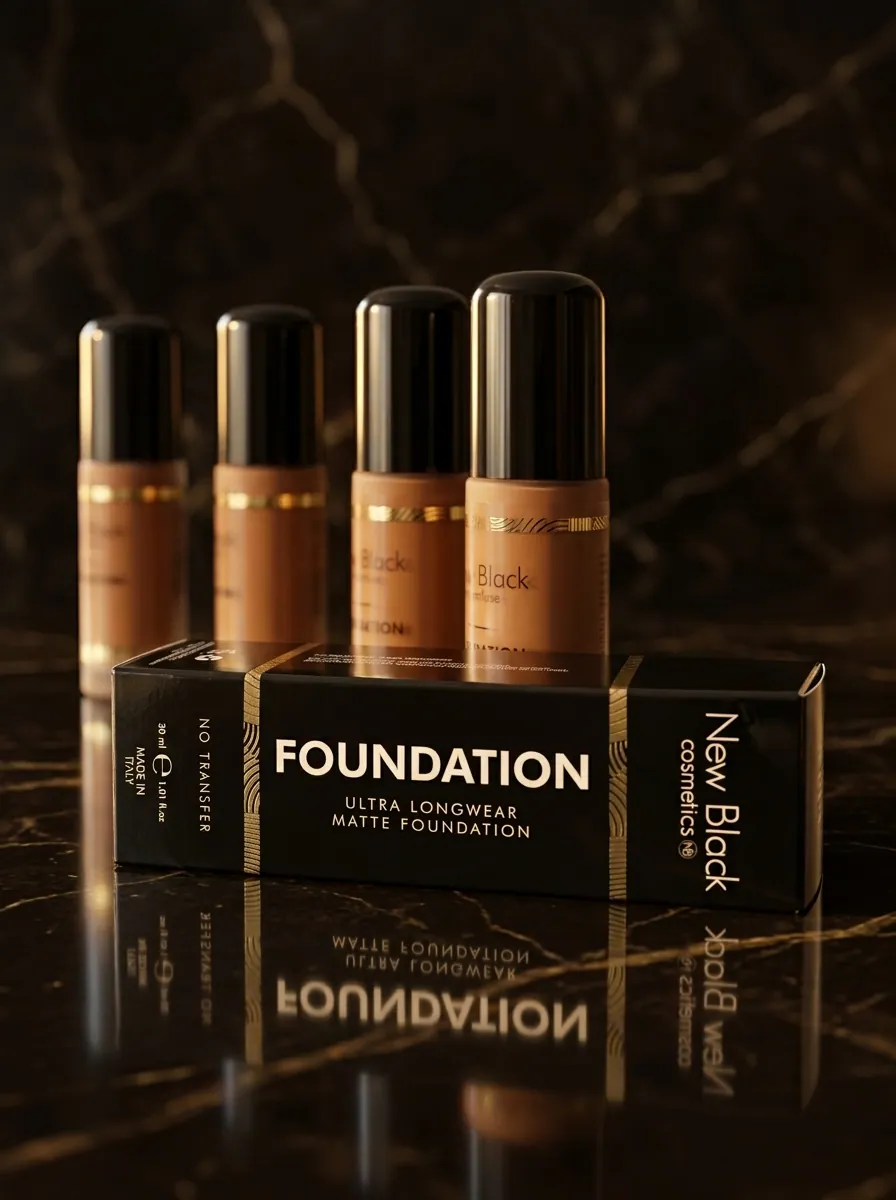
Our no-transfer fluid foundation was built for Black and Brown skin tones: six shades from light to deep (Trois-Îlets, Santa Maria, Kribi, Moanda, Assinie, Saly), a velvet finish, buildable coverage, and a transfer-proof film that lasts all day. Rated 4.9/5 by 24 customers. Its compact powder comes in the same shades to set without a white cast. Designed in Paris, made in Italy.
Frequently asked questions
Does a transfer-proof foundation dry out the skin?
Not if the skin is moisturised five minutes before and the application is thin. On dry skin, powder only the nose and choose a satin finish if the formula exists.
Does a transfer-proof foundation last 24 hours?
"Transfer-proof" describes resistance to rubbing, not a duration. Real wear is a full day (10 to 14 hours) with thin application and light powder; the "24 h" figures are lab numbers.
Do I need to powder a transfer-proof foundation?
Lightly, on the T-zone only, with a tinted powder: it locks and mattifies. Never a white translucent powder (grey cast), never on the cheeks.
Is transfer-proof foundation good for dark oily skin?
Yes, it's the best choice: matte or velvet finish, mattifying primer on the T-zone, powder touch-up at midday. It holds where a hydrating foundation slides.
How do I remove a transfer-proof foundation?
With an oily makeup remover or a balm massaged for thirty seconds, then a gentle cleanser. No water alone, no rubbing.
Does transfer-proof mean waterproof?
No. Transfer-proof resists rubbing; waterproof resists water. Some formulas do both; for a wedding or strong heat, ask for both.
Written by the NEW BLACK editorial team · Reviewed by Charlotte Mambo, NEW BLACK makeup artist · Updated 9 September 2026