


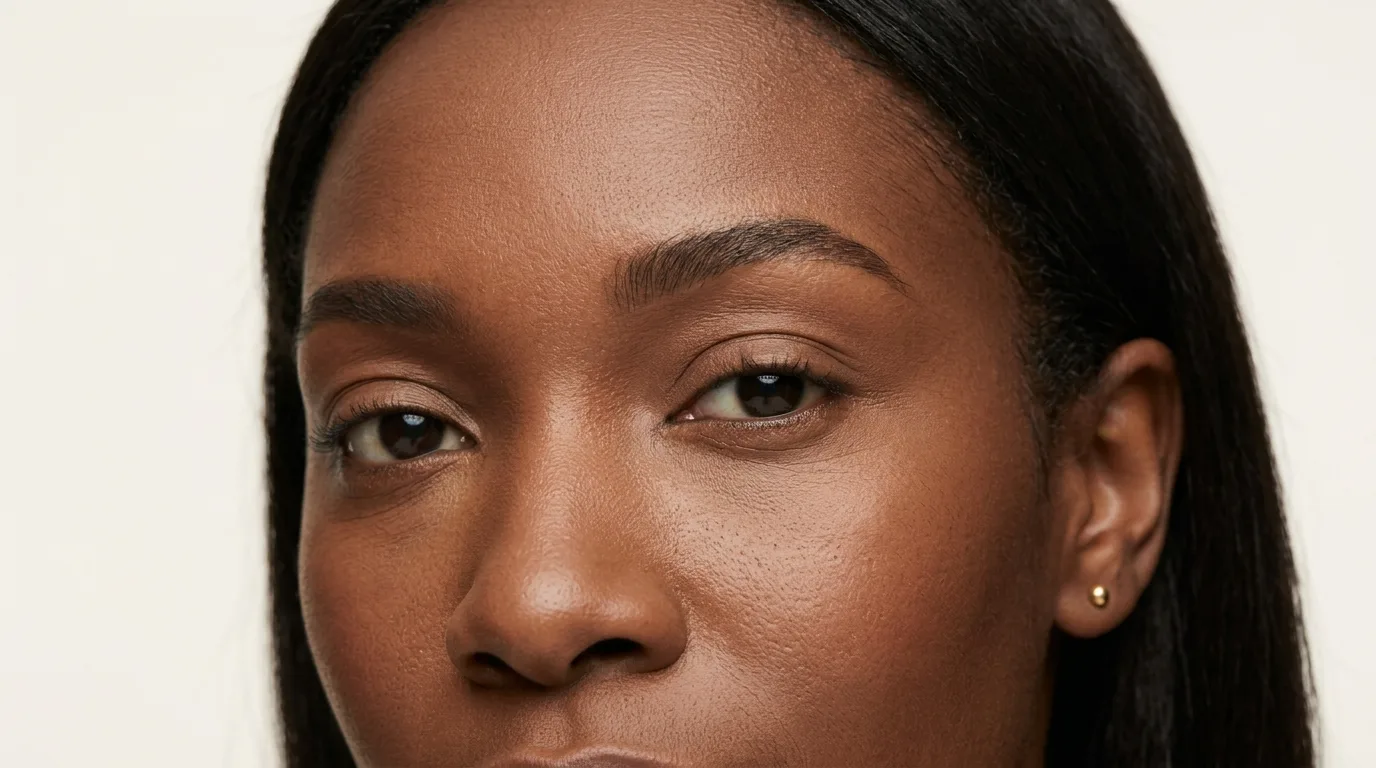
A NEW BLACK guide, the Paris makeup brand made for Black and Brown skin tones, reviewed by Charlotte Mambo, the brand's makeup artist.
On oily Black skin, the right foundation is velvet or matte, long-wear and transfer-proof, applied thin over a mattifying primer limited to the T-zone, and set with a tinted powder. The trap is double: mattifying too much (plaster effect, tight skin) or choosing the shade badly (oil makes it oxidise and go grey). Here's the routine that lasts the day, shine included.
This article is part of our guide to foundation for Black skin.
Oily skin on Black skin: what to understand
The skin shines on the T-zone (forehead, nose, chin), often not on the cheeks, and oil does two things to foundation: it makes it slide, and it oxidises it (the shade darkens or turns). Many oily skins are also dehydrated: mattifying everywhere dries them out and makes them shine more. The answer isn't "all matte", but "matte where it shines, hydrated elsewhere".
The routine in 6 steps

- Cleanse gently, without stripping (a harsh cleanser restarts oil production).
- Moisturise with a light texture (gel, fluid); wait five minutes.
- Mattifying primer on the T-zone only, a hazelnut.
- Foundation velvet or matte, long-wear, transfer-proof: a hazelnut for the whole face, a second touch on the areas that need evening out. Thin. See Transfer-proof foundation.
- Let it dry one to two minutes.
- Tinted powder on the T-zone, pressing. See Powder for Black skin.
During the day: blot the excess oil (tissue, blotting paper), then one press of compact powder. Never foundation for touch-ups.
Choosing the shade when you have oily skin

Test for ten minutes, not thirty seconds: oil can make foundation oxidise. Keep the shade that disappears after ten minutes. If a formula systematically turns orange or grey, change formula; as a last resort, half a shade lighter in the same undertone. The causes of the grey cast are detailed in Foundation that turns grey or ashy.
The finish: matte, velvet, satin?
| Finish | On oily Black skin | Note |
|---|---|---|
| Full matte | Lasts, but can look like plaster if applied thick | Reserve for fine formulas |
| Velvet | The best compromise: matte without being flat | Our choice |
| Satin | Shines quickly on the T-zone | For dry cheeks only, mixed in |
| Luminous | To avoid | Shine from the first hour |
The mistakes
- Mattifying the whole face: dry cheeks, more shine.
- Skipping moisturiser.
- A thick layer "so it lasts": it cracks.
- Translucent powder: grey veil.
- Touching up with foundation.
- Not letting it dry before powdering.
What NEW BLACK does
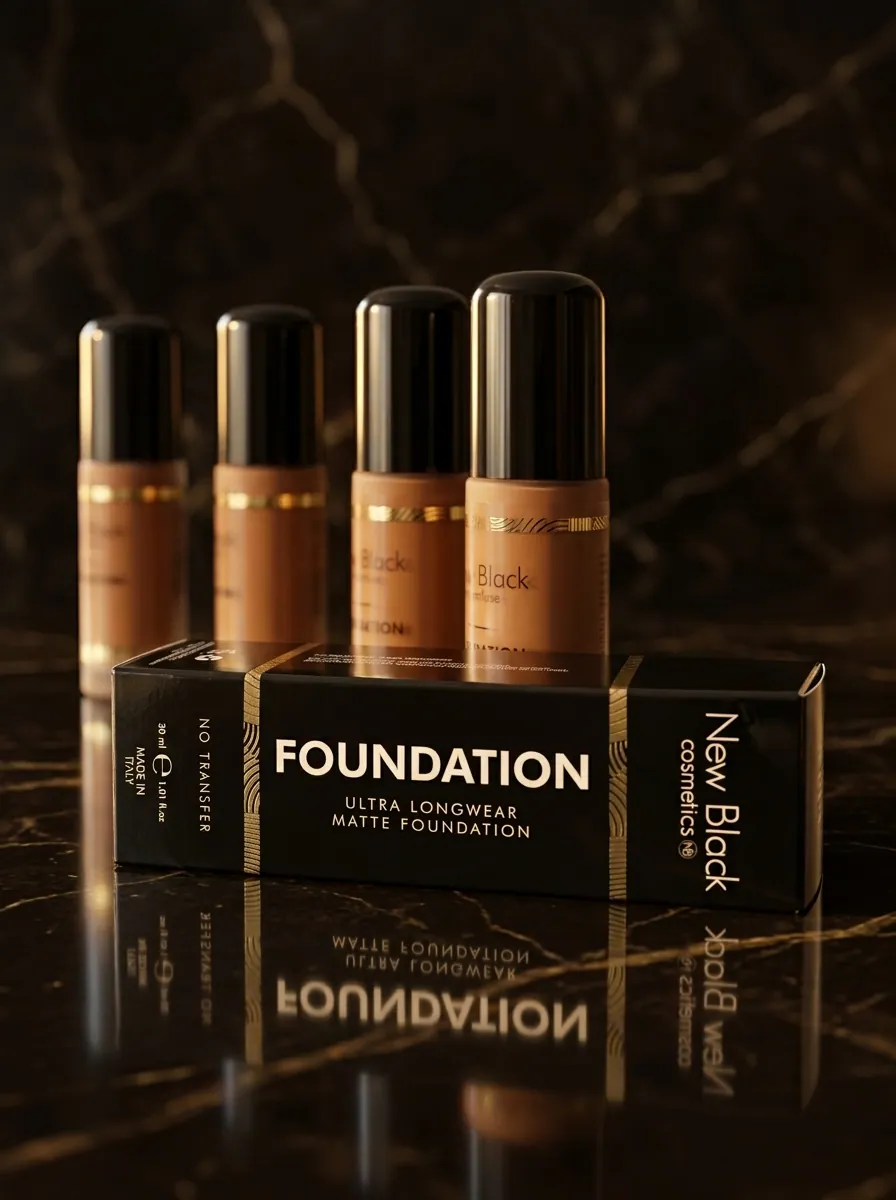
Our no-transfer fluid foundation has a velvet finish and all-day wear: it's the product our customers with oily skin choose most. Six shades from light to deep. With the tinted compact powder, it's the complexion duo: matte where needed, warm everywhere. Designed in Paris, made in Italy.
Frequently asked questions
What foundation for oily dark skin?
A velvet or matte finish, long-wear and transfer-proof, applied thin over a mattifying primer limited to the T-zone, set with a tinted powder.
How do I stop foundation shining on Black skin?
Mattifying primer on the T-zone, thin foundation, tinted powder, and a powder touch-up after blotting the oil. No thick layer.
My foundation turns orange or grey on my oily skin: why?
Oil makes some formulas oxidise. Test for ten minutes before choosing, change formula if it persists.
Should I moisturise oily skin before foundation?
Yes, with a light texture: dehydrated oily skin shines more and foundation lasts less.
Loose or compact powder on oily skin?
Tinted compact for touch-ups during the day; light loose in the morning if you set a long-wear application. Never translucent.
Written by the NEW BLACK editorial team · Reviewed by Charlotte Mambo, NEW BLACK makeup artist · Updated 9 September 2026