


Powder for Black skin: compact, loose, mattifying, the complete guide
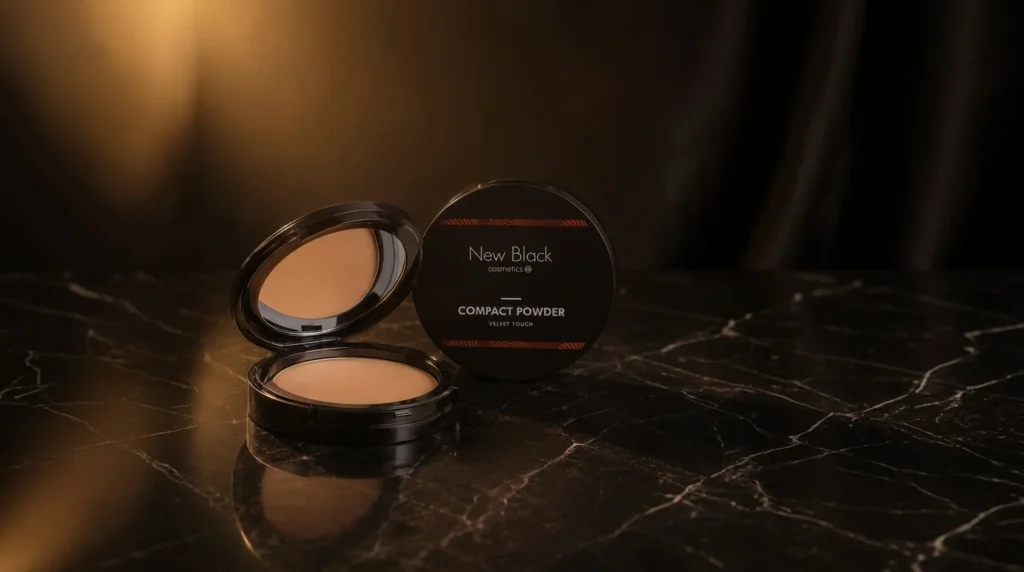
A NEW BLACK guide, the Paris makeup brand made for Black and Brown skin tones, reviewed by Charlotte Mambo, the brand's makeup artist.
On Black or Brown skin, powder must be tinted (in the shade of the foundation or half a shade deeper), never white translucent, and only applied where you shine: forehead, nose, chin. Well chosen and well applied, it sets the foundation, mattifies the T-zone and extends wear without going grey; badly chosen, it's the first cause of the ashy look. This guide explains which powder to choose, where and how to apply it, and when to skip it.
This is the "powder" guide of our complete guide to makeup for Black and Brown skin, a companion to the foundation guide.
What powder is for, and what it isn't for
It does two things: set the foundation and absorb shine. It isn't for covering, lightening, or "finishing" the whole face.
On Black skin, many complexions shine on the T-zone while being dry on the cheeks: powder goes on the T-zone, not on the cheeks. A fully powdered face looks flat, grey and older; a powdered T-zone and bare cheeks look natural.
Translucent, tinted, loose, compact: which one?
| Type | What it is | On Black skin |
|---|---|---|
| Translucent (white) | Talc, silica, starch without pigment | To avoid: grey veil, white mask in flash |
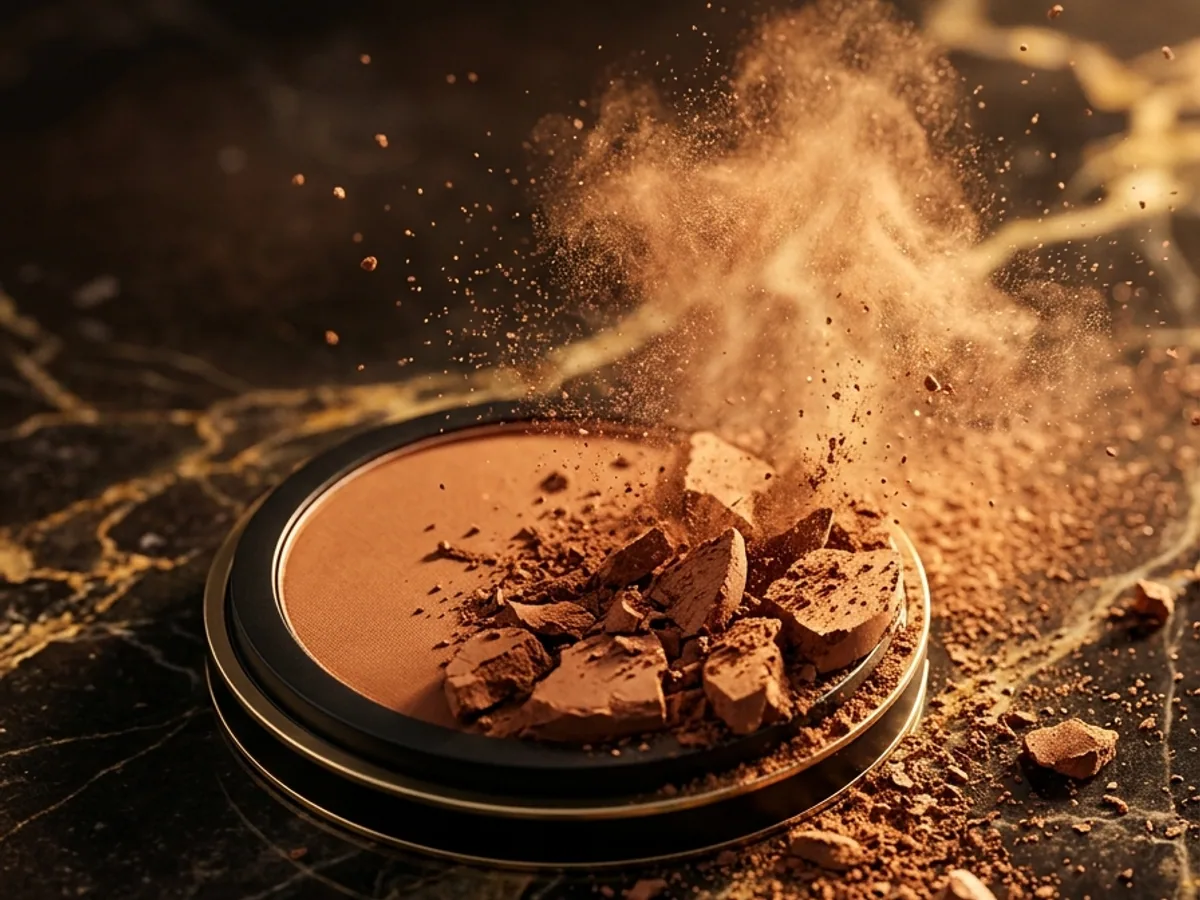
| Tinted compact | Pigments in the foundation shade, pressed | The right everyday choice: sets, mattifies, touch-ups in the bag |
| Tinted loose | Same principle, as a loose powder | To set a long-wear application (wedding), with a brush, very lightly |
| Deeper "bronzing" powder | One shade above yours | Works as contour: see bronzer and contouring |
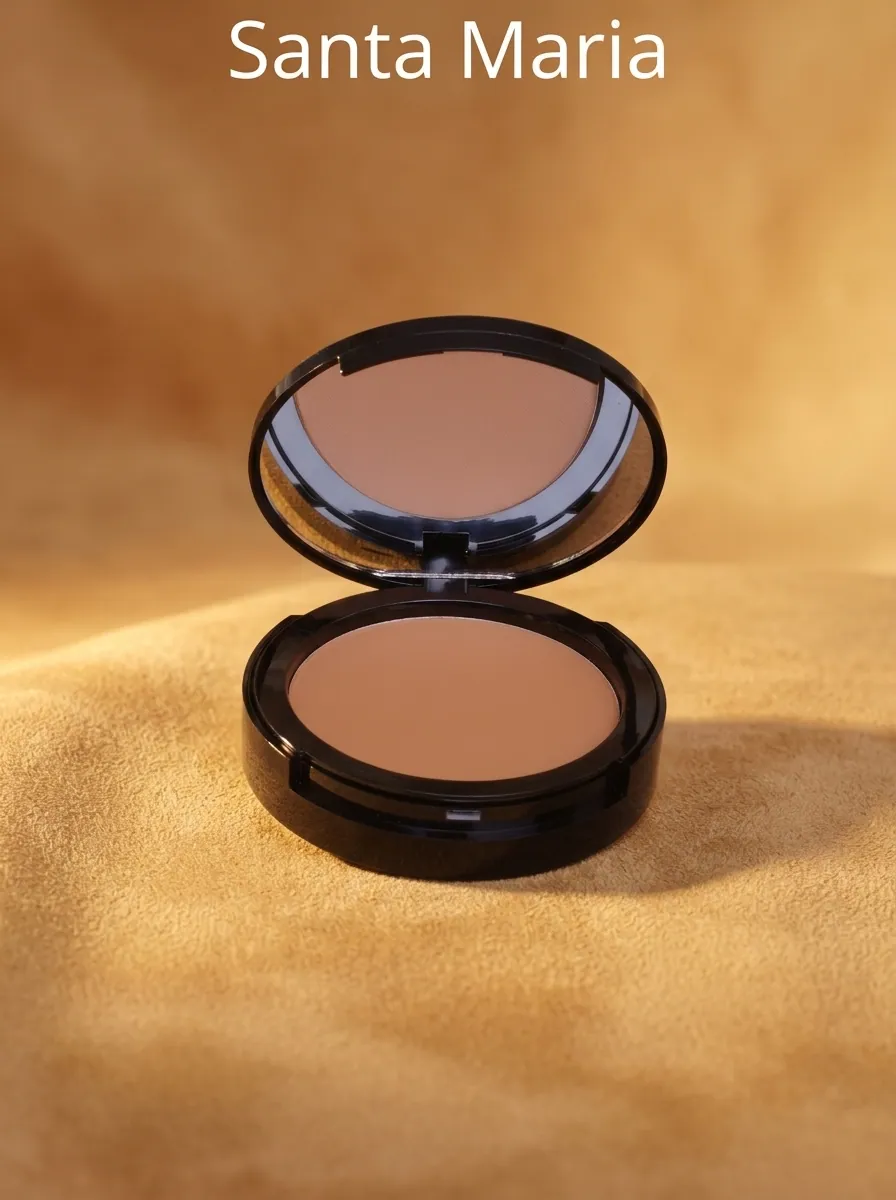
Our compact powder follows the six foundation shades (Trois-Îlets, Santa Maria, Kribi, Moanda, Assinie, Saly): applied over the foundation in the same shade, it sets and mattifies without changing the colour.
Choosing your powder shade
The same shade as your foundation, or half a shade deeper if your skin oxidises or if you want to avoid any risk of a light veil. Never lighter.
A powder lighter than the foundation is the most common mistake: it looks natural in the compact and grey on the skin, especially in photos. Between two shades, take the deeper one. Shade and undertone guide: Know your undertone.
Where and how to apply it
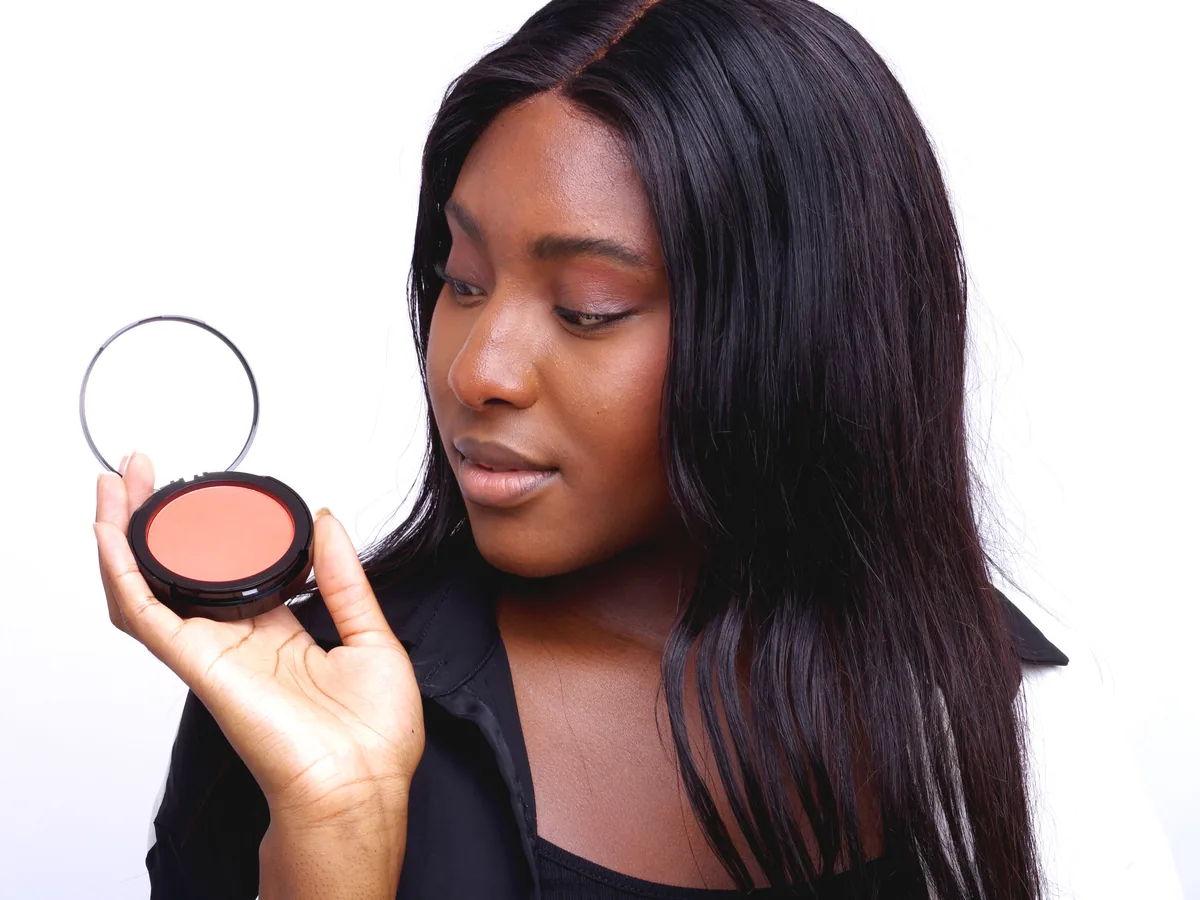
- After foundation, once it has dried one to two minutes.
- Soft brush (not the compact's sponge, which loads too much, except for a quick touch-up).
- T-zone only: forehead, bridge of the nose, chin. Possibly the upper lip if it shines.
- Pressing, never rubbing (rubbing moves the foundation).
- The cheeks stay bare: that's where the skin should keep its light.
At midday: one press of compact powder on the nose and forehead, without adding foundation (it thickens).
Oily, dry, mature skin
- Oily skin: mattifying primer on the T-zone before foundation, tinted powder after, touch-up at midday. Two light applications beat one thick layer. Our guide: Foundation for oily Black skin.
- Dry skin: moisturise, satin foundation, powder only on the bridge of the nose, or not at all.
- Mature skin: powder on the nose only; never under the eyes or on the cheeks (it settles). Details: Makeup for mature Black skin.
- Heat, ceremonies: transfer-proof foundation + tinted powder on the T-zone + touch-up: see Transfer-proof foundation.
Powder and the grey cast
If your complexion turns grey after powdering, or only in photos, it's the powder. Replace it with a tinted powder, reduce the amount, limit it to the T-zone. The other causes (shade too light, undertone, oxidation, dehydration) are in Foundation that turns grey or ashy.
Do I need powder with a transfer-proof foundation?
Not necessarily at first: a transfer-proof holds on its own. Powder becomes useful if your T-zone shines by midday, for long days, and for photos. A foundation + powder duo in the same shade is the simplest routine for a complexion that lasts and stays warm.
The NEW BLACK complexion duo
- No-transfer fluid foundation: 6 shades from light to deep, velvet finish.
- Compact powder: same shades, sets and mattifies without a white cast, built-in mirror for touch-ups.
Designed in Paris, made in Italy.
Our powder and complexion guides
- Compact powder for Black skin: choosing and applying
- Foundation for Black skin: how to choose the right one
- Foundation that turns grey or ashy
- Bronzer and contouring on Black skin (the deeper powder as contour)
Frequently asked questions
Which powder for Black skin?
A tinted powder, compact for every day, in the shade of your foundation or half a shade deeper. Never white translucent.
Does translucent powder work on dark skin?
No: its white powders leave a grey veil, especially visible in flash. Prefer a tinted powder.
Where do I apply powder on Black skin?
On the T-zone (forehead, nose, chin), pressing, after foundation. Not on the cheeks.
Loose or compact powder?
Compact for every day and touch-ups; loose, very light, to set a long-wear application (wedding). Both tinted.
Do I need to powder a transfer-proof foundation?
Only if the T-zone shines or for long days and photos; on the T-zone, tinted, light.
Written by the NEW BLACK editorial team · Reviewed by Charlotte Mambo, NEW BLACK makeup artist · Updated 9 September 2026